

What Is the Primary Difference Between Direct Injection and Port Fuel Injection?
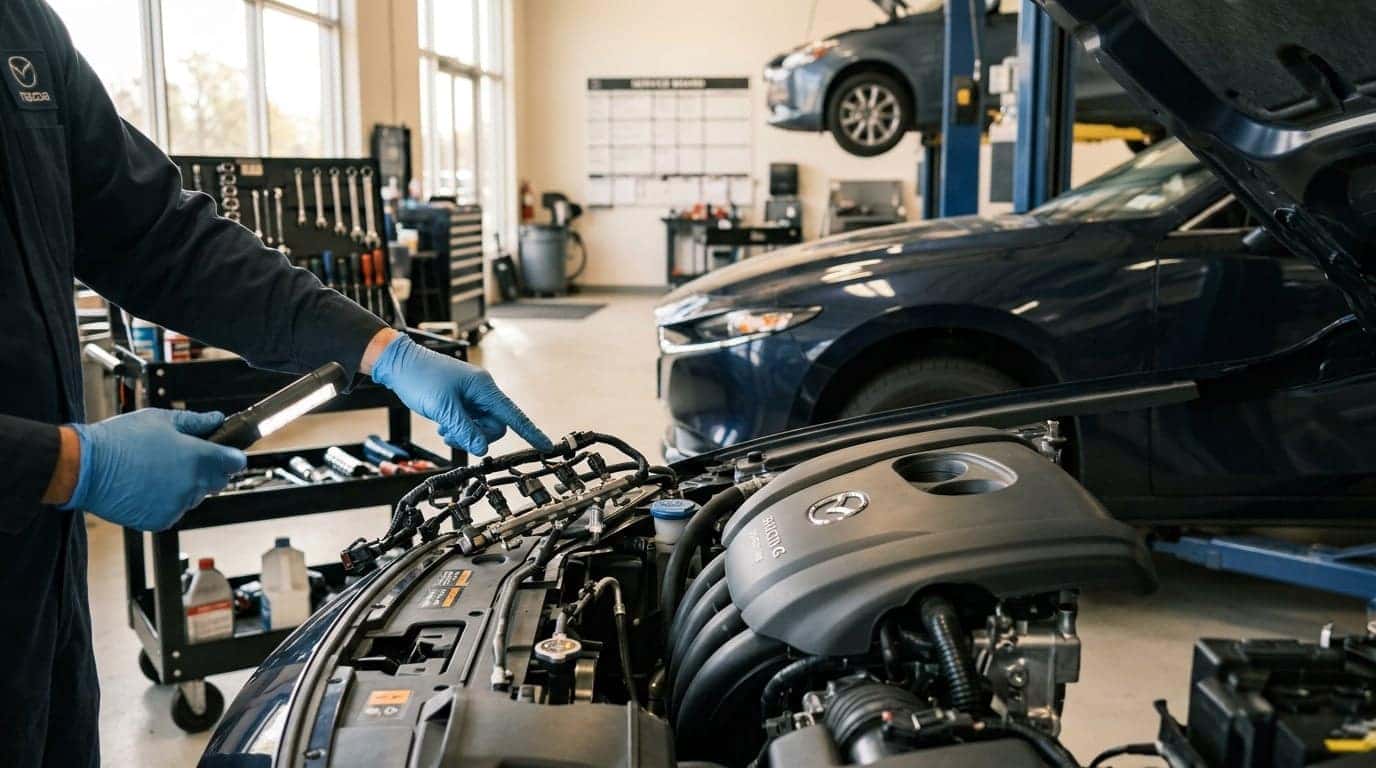
The primary difference between direct injection and port fuel injection is where fuel enters the engine and the pressure at which it is delivered. Direct injection sprays gasoline at extremely high pressure directly into the combustion chamber, maximizing power and fuel efficiency. In contrast, port fuel injection sprays fuel at lower pressure into the intake manifold, where it mixes with air before flowing past the intake valves into the cylinder.
Understanding these two delivery methods reveals how modern internal combustion engines balance everyday efficiency with long-term mechanical durability. In traditional port fuel injection systems, fuel sprays directly onto the backside of the intake valve. Because gasoline contains detergent additives, this continuous fuel spray washes away oil droplets and carbon residue before they can harden. However, port injection operates at lower fuel pressures, typically around 40 to 60 PSI, which limits how precisely fuel droplet size and combustion timing can be managed during rapid acceleration.
Direct injection operates at pressures exceeding 2,000 PSI, atomizing gasoline into a fine mist directly inside the cylinder. Spraying fuel directly into the chamber lowers cylinder temperatures, allowing higher compression ratios without thermal engine knock. SAE International technical publications highlight that this precise fuel metering reduces raw emissions during cold starts and enhances low-end torque output. The mechanical trade-off occurs at the intake valves: because gasoline never touches the intake manifold or the backside of the intake valves in a direct injection system, those components lack continuous chemical washing.
Drivers looking to evaluate modern powertrain options in person can visit our Gallatin showroom location or give our service advisors a call at (615) 442-3090 to discuss vehicle maintenance schedules and engine designs.
Table of Contents
- Why Direct Injection Engines Accumulate Carbon Deposits on Intake Valves
- How Dual Fuel Injection Systems Operate During Driving to Wash Valves
- Can Carbon Buildup Cause Misfires and What Does Cleaning Cost?
- Is Buying a Vehicle with a Dual-Injection Engine Worth the Extra Cost?
- Common Questions About Dual Injection and Carbon Buildup
- Exploring Reliable Engine Options at Newton Nissan
Why Direct Injection Engines Accumulate Carbon Deposits on Intake Valves
Direct injection engines accumulate carbon deposits on intake valves because fuel detergent sprays directly into the cylinder rather than over the intake valves, leaving crankcase oil vapors to bake onto the hot metal valve stems. Without a continuous stream of liquid fuel to wash the valve surfaces, microscopic oil droplets introduced by the Positive Crankcase Ventilation (PCV) system stick to hot engine components and form a stubborn crust over time.
Every internal combustion engine generates blow-by gases during normal operation. The PCV system draws these gases out of the crankcase and routes them back through the intake manifold to be burned cleanly during combustion. These gases contain airborne engine oil mist and unburned hydrocarbon droplets. In older engine designs, the constant spray from a port injector continually washed these oily vapors off the intake valves. In a direct-injected cylinder head, those same oil vapors pass over intake valves that reach temperatures between 300 and 500 degrees Fahrenheit, causing the oil residue to heat-cure into hard carbon crust.
This carbon accumulation process begins within the first 20,000 miles of driving, though noticeable performance symptoms generally do not appear until between 40,000 and 80,000 miles. Driving conditions significantly impact the rate of deposit formation. Frequent short trips around Cross Plains, where the engine does not reach full operating temperature long enough to evaporate moisture and lighter oil fractions, can accelerate valve fouling. Understanding these engineering differences helps owners plan effective preventive care, which is a major reason to review why drivers choose Newton Nissan of Gallatin for transparent maintenance guidance. Evaluating these details is equally valuable when shopping our pre-owned Nissan vehicle inventory to ensure long-term ownership confidence.
Engine & Performance
Powertrain specs by trim
| Feature | 2.5 SR | 2.5 SR AWD | 2.5 SV | 2.5 SV AWD |
|---|---|---|---|---|
| Engine | 2.5L | 2.5L | 2.5L | 2.5L |
| Horsepower | 188 hp | 182 hp | 188 hp | 182 hp |
| Torque | 180 lb-ft | 178 lb-ft | 180 lb-ft | 178 lb-ft |
| Transmission | Xtronic | Xtronic | Xtronic | Xtronic |
| Drivetrain | Front-wheel drive | All-wheel drive | Front-wheel drive | All-wheel drive |
How Dual Fuel Injection Systems Operate During Driving to Wash Valves
A dual fuel injection system operates by using an engine control unit (ECU) to automatically switch between or combine port fuel injection and direct injection based on real-time engine speed, load, and temperature. Under low-load driving conditions such as idling or steady cruising, the system activates the port injectors to spray detergent-treated fuel across the intake valves, continuously cleaning away carbon deposits while optimizing fuel combustion.
When power demands increase during highway merging or towing, the ECU engages the high-pressure direct injection system. Direct fuel delivery provides the cooling effect needed inside the combustion chamber to support higher compression and prevent engine knock under heavy load. During moderate acceleration, many systems run both injector sets simultaneously, blending the high-pressure atomization of direct delivery with the precise fuel-air mixing of port delivery.
This dual-strategy operation solves the primary mechanical drawback of standard direct injection without sacrificing engine output or fuel efficiency:
- Low-Speed and Idle Operation: Port injectors supply fuel into the intake runner, washing valve stems with gasoline detergents and minimizing particulate emissions.
- Moderate Acceleration: Both port and direct injectors operate together, balancing fuel atomization, valve cleanliness, and throttle response.
- High-Load Performance: Direct injectors deliver the vast majority of fuel straight into the cylinder, suppressing knock and maximizing horsepower.
Shoppers evaluating modern engine designs often discover that dual fuel injection provides automatic, hands-off valve maintenance during everyday trips without requiring specialized fuel additives. Drivers considering upgrading their current vehicle can easily value your trade-in online to explore how modern powertrain technology can simplify daily ownership.
Fuel Economy
Fuel economy and range by trim
| Feature | 2.5 SR | 2.5 SR AWD | 2.5 SV | 2.5 SV AWD |
|---|---|---|---|---|
| MPG | 26 city / 36 hwy / 30 combined | 25 city / 33 hwy / 28 combined | 26 city / 36 hwy / 30 combined | 25 city / 33 hwy / 28 combined |
Can Carbon Buildup Cause Misfires and What Does Cleaning Cost?
Heavy carbon buildup on intake valves restricts combustion airflow, leading to engine hesitating, rough idling, misfires, loss of horsepower, and diminished fuel economy symptoms. As carbon deposits thicken around the valve stem and seat, they disrupt incoming air velocity and prevent the intake valve from sealing completely against the cylinder head, triggering diagnostic trouble codes such as P0300 for random cylinder misfires.
When valve sealing is compromised, cylinder compression drops, causing erratic idling and sluggish response when pressing the accelerator. In severe cases, hardened carbon chunks can break off and enter the combustion chamber or become stuck between the valve edge and seat, potentially causing valve bent damage or valve guide wear. Chemical pour-in fuel tank treatments cannot clean these deposits on direct-injected engines because the liquid additive goes straight into the gas tank and bypasses the intake valves entirely. Spray-in intake cleaners offer minor preventive benefits but cannot dissolve thick, hardened carbon crust.
Restoring air passage volume requires manual carbon removal, most commonly performed using walnut shell blasting. This service involves removing the intake manifold, sealing off intake ports for cylinders with closed valves, and blasting crushed walnut media at high pressure to scrub the metal clean without scratching internal engine surfaces.
| Service Factor | Walnut Blasting Details |
|---|---|
| Service Cost Range | $400 to $1,200 depending on manifold removal labor |
| Typical Service Interval | Every 50,000 to 80,000 miles on direct-injection engines |
| Primary Physical Benefit | Completely restores factory airflow volume and cylinder compression |
| Symptom Resolution | Eliminates rough idle, hesitation, and carbon-induced misfires |
Commuters driving daily from Westmoreland who notice reduced engine response or unexpected fuel economy drops should address valve inspection early before severe misfires occur. Vehicle owners maintaining their own maintenance routines can order genuine OEM components online directly through our dedicated dealership department.
Is Buying a Vehicle with a Dual-Injection Engine Worth the Extra Cost?
Buying a vehicle with a dual fuel injection engine is worth the extra upfront engineering cost for long-term vehicle owners because it eliminates periodic $400 to $1,200 intake valve cleaning bills while preserving fuel economy and engine output over time. By incorporating both port and direct injectors, the system pays for itself by preventing the performance degradation and mechanical repair expenses common to direct-injection-only designs.
The financial and operational value of dual injection comes down to total cost of ownership. While a dual-injected engine includes extra mechanical hardware—such as dual fuel rails, an expanded wiring harness, and a secondary set of injectors—it eliminates the recurring maintenance tax associated with walnut shell blasting every 50,000 to 80,000 miles. Furthermore, keeping intake valves clean maintains factory-rated fuel efficiency and peak horsepower throughout the vehicle’s lifespan, preventing the gradual 5% to 10% drop in fuel economy caused by restricted intake airflow.
For drivers who keep their vehicles past 100,000 miles, avoiding two de-carbonization service appointments saves roughly $1,000 to $2,000 in preventive maintenance labor alone. Combined with consistent fuel savings and reduced risk of carbon-induced misfires, dual injection represents a highly practical engineering solution for cost-conscious vehicle owners.
Shoppers exploring efficient, reliable vehicle options can browse our complete new Nissan vehicle selection to compare modern engine designs and features. Our finance department makes purchasing straightforward, allowing customers to easily apply for financing online before visiting our dealership.
Common Questions About Dual Injection and Carbon Buildup
Q: Does adding fuel additives to the gas tank clean direct-injection intake valves?
No, bottle fuel additives poured into the gas tank do not clean intake valves on direct-injection engines. Because direct fuel injectors spray gasoline directly into the combustion chamber, detergent-treated fuel never comes into contact with the intake manifold or the backside of the intake valves. Gas tank additives only clean fuel lines, high-pressure injectors, and combustion chamber tops. On engines with dual fuel injection, however, gas tank detergent additives are effective because the port injectors spray that treated fuel directly over the intake valves during normal light-load driving.
Q: Does dual fuel injection improve fuel economy compared to direct injection alone?
Dual fuel injection offers modest fuel economy improvements under specific driving conditions, particularly during idling and low-speed city driving. Operating high-pressure direct injectors requires significant mechanical energy from the engine-driven fuel pump. At low engine speeds, switching to low-pressure port injection reduces parasitic drag on the engine while delivering highly precise air-fuel metering. Combining both injection strategies allows the engine control unit to optimize combustion efficiency across all load ranges, saving fuel during stop-and-go commuting.
Q: How long does it take for carbon deposits to accumulate on direct-injection valves?
Intake valve carbon accumulation begins within the first 20,000 miles on direct-injection engines, though physical symptoms typically remain unnoticed initially. Heavy carbon buildup that restricts airflow and causes rough idling or hesitation generally develops between 40,000 and 80,000 miles. Factors such as frequent short trips, poor oil maintenance, and extended idle times accelerate deposit formation. Vehicles driven primarily on highways at steady operating temperatures tend to accumulate deposits more slowly due to sustained thermal stability inside the cylinder head.
Q: Can chemical intake sprays safely clean severe valve carbon buildup?
Chemical aerosol cleaners sprayed through the throttle body can help remove soft, fresh oil film before it hardens, but they are generally ineffective against thick, cured carbon crust. Attempting to dissolve heavy carbon buildup with aggressive chemical sprays carries mechanical risks; large carbon chunks can detach and become trapped between the valve and valve seat or damage oxygen sensors and catalytic converters downstream in the exhaust system. Once carbon crust has hardened, mechanical cleaning methods like walnut shell blasting are required.
Q: Do certified pre-owned vehicles undergo engine performance inspections before sale?
Yes, pre-owned vehicles enrolled in manufacturer certified programs undergo comprehensive multi-point mechanical inspections that cover fuel delivery systems, engine compression, and diagnostic computer scans. Technicians check for diagnostic trouble codes, smooth idling, and proper throttle response to ensure the engine meets strict operational standards. Buyers interested in thorough coverage details can review our certified pre-owned program guidelines or complete their purchase online using our Newton Fastpass digital buying tool.
Exploring Reliable Engine Options at Newton Nissan
Modern Nissan engine engineering focuses on delivering responsive power, excellent fuel economy, and long-term mechanical dependability for daily commuters and active families alike. Vehicles across the current lineup utilize precise fuel management, advanced valve timing, and durable internal component designs to ensure efficient performance on every drive.
For sedan shoppers, the 2026 Nissan Altima features a dependable 2.5L four-cylinder engine paired with an advanced Xtronic continuous variable transmission. Standard front-wheel-drive Altima models output 188 hp and 180 lb-ft of torque while achieving an EPA-estimated 26 city / 36 hwy MPG. Drivers choosing all-wheel-drive configurations enjoy confident traction with 182 hp and 178 lb-ft of torque, rated at 25 city / 33 hwy MPG.
Families requiring three-row seating and towing capability will find robust power in the 2026 Nissan Pathfinder. Powered by a proven 3.5L V6 engine producing 284 hp and 259 lb-ft of torque paired with a smooth 9-speed automatic transmission, the Pathfinder delivers an EPA-estimated 21 city / 27 hwy MPG and a maximum towing capacity of up to 6,000 lbs when properly equipped.
Our service and sales teams at Newton Nissan of Gallatin are dedicated to helping you select and maintain the perfect vehicle for your lifestyle. Visit us in person at 1461 Nashville Pike in Gallatin to explore our complete inventory or contact our staff directly at (615) 442-3090 to schedule your next test drive today.
0 comment(s) so far on What Is the Primary Difference Between Direct Injection and Port Fuel Injection?