

Are Rear Seat Air Vents and USB Ports Standard on the 2023 Nissan Rogue and Hyundai Tucson?
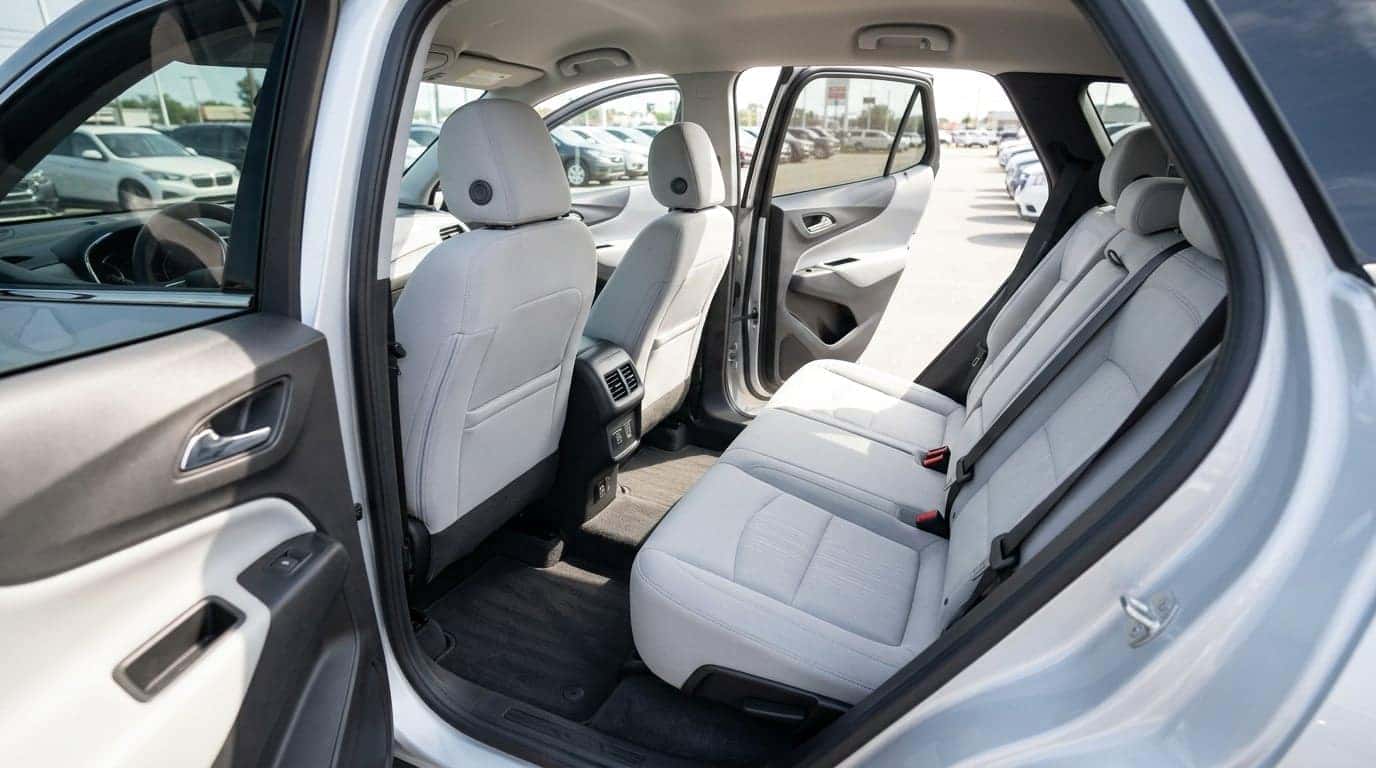
Rear seat air vents and USB ports are not standard on the base trim of either crossover. On the 2023 Nissan Rogue, both rear climate vents and dual rear USB charging ports become standard starting on the Rogue SV trim level. On the 2023 Hyundai Tucson, rear air vents and rear USB ports are absent on the entry SE model and require stepping up to the Tucson SEL trim.
For drivers taking the daily commute along local state routes through Portland, having dedicated climate vents in the second row ensures that rear passengers stay cool during hot summer afternoons without overworking the front climate control. On base models of both vehicles, rear passengers rely entirely on air flowing from the front dash vents, which can take significantly longer to reach comfortable temperatures throughout the cabin.
The Rogue SV upgrades second-row convenience by adding both USB Type-A and USB Type-C charging ports built directly into the back of the center console. This allows kids or rear passengers to keep smartphones and tablets powered during longer weekend road trips. Upgrading to higher models like the Rogue SL or Rogue Platinum further adds tri-zone automatic climate control, giving rear-seat occupants independent control over their temperature settings.
To explore feature availability across trims in person, stop by our Gallatin showroom location or give our team a quick call at (615) 442-3090 to compare cabin layouts.
Table of Contents
- 2023 Nissan Rogue vs Hyundai Tucson Engine Performance Specs and 0 to 60 Acceleration Times
- Interior Space and Utility: Rear Seat Legroom Dimensions and Cabin Practicality
- Which Compact SUV Delivers Better Real-World Fuel Economy and Annual Gas Savings?
- Estimated 5-Year Total Cost of Ownership and Depreciation Rates for the 2023 Rogue and Tucson
- How Do IIHS Safety Ratings and Standard Driver-Assist Features Compare?
- Answers to Common Questions About Buying a 2023 Nissan Rogue
2023 Nissan Rogue vs Hyundai Tucson Engine Performance Specs and 0 to 60 Acceleration Times
The 2023 Nissan Rogue accelerates faster and delivers significantly more torque than the standard gasoline-powered 2023 Hyundai Tucson. Equipped with a 1.5L VC-Turbo engine producing 201 hp and 225 lb-ft of torque, the Rogue reaches 0 to 60 mph in roughly 8 seconds. The non-hybrid Tucson relies on a naturally aspirated 2.5-liter four-cylinder engine generating 187 hp and 178 lb-ft of torque, taking roughly 9 seconds to complete the same 0 to 60 mph sprint.
The secret behind the Rogue’s responsive acceleration lies in its variable-compression technology. Paired with an advanced Xtronic continuously variable transmission, the engine seamlessly alters its internal compression ratio to prioritize quick throttle response when merging onto high-speed highways or maximum fuel efficiency while cruising. The additional 47 lb-ft of low-end torque compared to the Tucson means the Rogue accelerates with far less effort from a complete stop.
On long highway runs or two-lane stretches around Shackle Island Road, that extra torque provides immediate passing power without forcing the transmission to hunt through multiple downshifts. The non-hybrid Tucson utilizes a traditional 8-speed automatic transmission that can feel slower to respond when sudden acceleration is required.
Drivers seeking high performance across daily driving scenarios can turn to our team as your local crossover vehicle resource, or take a look through our pre-owned vehicle lineup to compare different powertrain options firsthand.
Engine & Performance
Powertrain specs by trim
| Feature | Platinum AWD | Platinum FWD | S AWD | S FWD |
|---|---|---|---|---|
| Engine | 1.5L | 1.5L | 1.5L | 1.5L |
| Horsepower | 201 hp | 201 hp | 201 hp | 201 hp |
| Torque | 225 lb-ft | 225 lb-ft | 225 lb-ft | 225 lb-ft |
| Transmission | Xtronic | Xtronic | Xtronic | Xtronic |
| Drivetrain | All-wheel drive | Front-wheel drive | All-wheel drive | Front-wheel drive |
Engine & Performance (continued)
| Feature | SL AWD | SL FWD | SV AWD | SV FWD |
|---|---|---|---|---|
| Engine | 1.5L | 1.5L | 1.5L | 1.5L |
| Horsepower | 201 hp | 201 hp | 201 hp | 201 hp |
| Torque | 225 lb-ft | 225 lb-ft | 225 lb-ft | 225 lb-ft |
| Transmission | Xtronic | Xtronic | Xtronic | Xtronic |
| Drivetrain | All-wheel drive | Front-wheel drive | All-wheel drive | Front-wheel drive |
Interior Space and Utility: Rear Seat Legroom Dimensions and Cabin Practicality
The 2023 Hyundai Tucson offers slightly more rear legroom at about 41 inches compared to the 2023 Nissan Rogue at about 39 inches, but the Rogue counters with practical cabin design features that maximize day-to-day utility for busy families. The Rogue provides up to 37 cubic feet of cargo space behind the second row and 74 cubic feet with the rear seats folded flat, while the Tucson provides 39 cubic feet with seats up and 80 cubic feet with seats down.
While raw passenger volume numbers slightly favor the Tucson on paper, physical accessibility often dictates real-world convenience. The rear passenger doors on the Rogue open to nearly 90 degrees, creating a wide entryway that makes loading bulky cargo, installing child safety seats, or strapping in young children dramatically easier than in competitors with narrower door swings.
When families test-drive a crossover at our lot, they frequently check how far the rear doors open before loading strollers or car seats into the back. The Rogue also features the exclusive Divide-N-Hide cargo system on upper trims, which offers configurable floor panels to create hidden compartments, recessed storage shelves, or a flat floor barrier to keep groceries from sliding around.
If you are planning to upgrade your family vehicle, you can easily value your trade-in online to see how your current vehicle’s equity can apply toward your purchase.
Dimensions & Capacity
Capacity and dimensions by trim
| Feature | Platinum AWD | Platinum FWD | S AWD | S FWD |
|---|---|---|---|---|
| Seating | 5 | 5 | 5 | 5 |
| Cargo | 36.5 cu ft | 36.5 cu ft | 31.6 cu ft | 31.6 cu ft |
| Curb weight | 3,713 lbs | 3,587 lbs | 3,580 lbs | 3,457 lbs |
| Payload | 972 lbs | 966 lbs | 1,105 lbs | 1,096 lbs |
Dimensions & Capacity (continued)
| Feature | SL AWD | SL FWD | SV AWD | SV FWD |
|---|---|---|---|---|
| Seating | 5 | 5 | 5 | 5 |
| Cargo | 36.5 cu ft | 36.5 cu ft | 31.6 cu ft | 31.6 cu ft |
| Curb weight | 3,695 lbs | 3,569 lbs | 3,616 lbs | 3,490 lbs |
| Payload | 990 lbs | 984 lbs | 1,069 lbs | 1,063 lbs |
Which Compact SUV Delivers Better Real-World Fuel Economy and Annual Gas Savings?
The 2023 Nissan Rogue achieves higher EPA fuel economy estimates than the non-hybrid Hyundai Tucson across both front-wheel-drive and all-wheel-drive gasoline models. Front-wheel-drive Rogue trims deliver up to 30 mpg city / 37 mpg highway, while all-wheel-drive models post ratings of 28 mpg city / 34 mpg highway. Non-hybrid front-wheel-drive Tucson models reach up to 25 mpg city / 32 mpg highway, dropping to 23 mpg city / 28 mpg highway when equipped with all-wheel drive.
This efficiency advantage stems directly from Nissan’s 1.5L VC-Turbo engine design, which adjusts its compression ratio to conserve fuel when high power output is not needed. For driver routines involving mixed city and highway travel, the Rogue offers tangible financial savings at the pump.
Depending on local gas prices and overall annual mileage, driving a standard gas-powered Rogue over a standard gas-powered Tucson can save drivers approximately $150 to $300 per year in fuel expenses. Over a multi-year ownership cycle, those savings directly offset recurring operational costs.
To explore vehicle purchasing options that align with your monthly driving budget, take a moment to apply for pre-approved auto financing before visiting the showroom.
Fuel Economy
Fuel economy and range by trim
| Feature | Platinum AWD | Platinum FWD | S AWD | S FWD |
|---|---|---|---|---|
| MPG | 28 city / 34 hwy / 31 combined | 29 city / 36 hwy / 32 combined | 28 city / 35 hwy / 31 combined | 30 city / 37 hwy / 33 combined |
Fuel Economy (continued)
| Feature | SL AWD | SL FWD | SV AWD | SV FWD |
|---|---|---|---|---|
| MPG | 28 city / 34 hwy / 31 combined | 29 city / 36 hwy / 32 combined | 28 city / 35 hwy / 31 combined | 30 city / 37 hwy / 33 combined |
Estimated 5-Year Total Cost of Ownership and Depreciation Rates for the 2023 Rogue and Tucson
Over a 5-year period, the Nissan Rogue’s fuel efficiency and resale value help offset the Hyundai Tucson’s initial lower purchase price, resulting in similar ownership costs. Under standard driving conditions of roughly 15,000 miles per year, a 2023 Rogue is projected to experience an estimated 40% to 45% depreciation rate over its first 5 years.
The original manufacturer pricing lineup for the 2023 Rogue spans accessible entry models to well-appointed luxury-tier trims:
- Rogue S FWD: $28,010 base MSRP ($29,510 with AWD)
- Rogue SV FWD: $29,700 base MSRP ($31,200 with AWD)
- Rogue SL FWD: $34,160 base MSRP ($35,660 with AWD)
- Rogue Platinum FWD: $37,590 base MSRP ($39,090 with AWD)
While Hyundai provides longer initial powertrain warranty limits (10-year/100,000-mile powertrain warranty versus Nissan’s 5-year/60,000-mile limited warranty), the Rogue helps lower long-term maintenance costs through durable engineering and widely available replacement components. Scheduled oil changes, tire rotations, and brake servicing maintain high resale value when performed on schedule.
To maintain your vehicle’s peak efficiency and long-term resale value, you can order genuine Nissan replacement parts online directly through our dealership service counter.
Pricing
Pricing by trim
| Feature | Platinum AWD | Platinum FWD | S AWD | S FWD |
|---|---|---|---|---|
| Base MSRP | $39,090 | $37,590 | $29,510 | $28,010 |
| Destination charge | $1,390 | $1,390 | $1,390 | $1,390 |
Pricing (continued)
| Feature | SL AWD | SL FWD | SV AWD | SV FWD |
|---|---|---|---|---|
| Base MSRP | $35,660 | $34,160 | $31,200 | $29,700 |
| Destination charge | $1,390 | $1,390 | $1,390 | $1,390 |
How Do IIHS Safety Ratings and Standard Driver-Assist Features Compare?
Both the 2023 Nissan Rogue and 2023 Hyundai Tucson earned Top Safety Pick awards from the Insurance Institute for Highway Safety (IIHS) along with 5-star overall crash safety ratings from the NHTSA. Both crossovers feature strong high-strength steel crash structures, comprehensive airbag coverage, and advanced child seat anchors across the rear row.
Where Nissan differentiates itself is in the breadth of standard safety technology included on every trim level. The standard Nissan Safety Shield 360 suite includes:
- Automatic Emergency Braking with Pedestrian Detection
- Rear Automatic Braking
- Blind Spot Warning
- Rear Cross Traffic Alert
- Lane Departure Warning
- High Beam Assist
While Hyundai offers comparable safety features, systems like rear automatic braking are often reserved for higher-tier Tucson models. Nissan also offers available ProPILOT Assist, an advanced driver-assist feature that combines adaptive cruise control with steering assistance to reduce highway driving fatigue during long commutes.
Safety & Driver Assistance
Safety and driver-assistance features by trim
All trims from Platinum AWD to SV FWD come standard with a comprehensive set of safety features including ABS, Isofix preparation, active and height-adjustable head restraints for both front and rear seats, and a complete array of seat belts with pre-tensioners and height adjustments for driver and passenger positions. Rear seating is secured with three 3-point center-type seat belts and standard belts for both driver and passenger sides. Additionally, every trim features an emergency call system and an accident data recorder to enhance safety responsiveness and accident analysis.
The entire lineup is equipped with an anti-collision system branded as Intelligent Forward Collision Warning (I-FCW), which includes features such as brake light activation, automatic emergency braking, and driver monitoring functions. This system also supports automatic braking at low speeds for both front and rear scenarios, marked by ‘D’ across all trims.
Answers to Common Questions About Buying a 2023 Nissan Rogue
Q: Is Intelligent All-Wheel Drive available on every 2023 Nissan Rogue trim?
Yes, Nissan offers Intelligent All-Wheel Drive across the entire 2023 Rogue lineup, including the Rogue S, Rogue SV, Rogue SL, and Rogue Platinum. The system constantly monitors road traction and automatically transfers torque to the rear wheels when slipping is detected to improve stability on wet or loose road surfaces.
Q: How does the Nissan Divide-N-Hide system improve cargo usability?
The Divide-N-Hide cargo system features adjustable floor panels that can be arranged into multiple distinct positions. Owners can drop the floor level lower to fit taller items, create a flat load floor with hidden storage underneath, or position a panel vertically to act as a barrier that prevents items from shifting during travel.
Q: What driver assistance functions are included with ProPILOT Assist?
ProPILOT Assist utilizes forward-facing cameras and radar to maintain a set distance from the vehicle ahead while keeping the Rogue centered in its lane. On trims equipped with Navi-link, the system uses navigation map data to proactively reduce vehicle speed when approaching sharp freeway curves, interchanges, or off-ramps.
Q: How do the wide-opening rear doors benefit parents with young children?
The rear doors on the 2023 Rogue open to an angle of nearly 90 degrees, which is substantially wider than standard passenger vehicle doors. This wide clearance gives parents significantly more room to lift, maneuver, and secure infant car seats or booster seats without bumping into the door frame.
Q: What documentation should I bring to streamline my trade-in evaluation?
When bringing your current vehicle in for a trade-in appraisal, bring your state vehicle title (or loan payoff details), current vehicle registration, proof of auto insurance, and all operational key fobs. Having these items ready allows our appraisal specialists to finalize your trade value and process paperwork efficiently.
To see how the 2023 Rogue fits your daily lifestyle, visit us at 1461 Nashville Pike in Gallatin, reach our team directly at (615) 442-3090, or explore our current new Nissan Rogue selection to schedule your test drive today.
0 comment(s) so far on Are Rear Seat Air Vents and USB Ports Standard on the 2023 Nissan Rogue and Hyundai Tucson?