

Has Nissan Officially Revealed the 2028 Altima and Confirmed Specs?
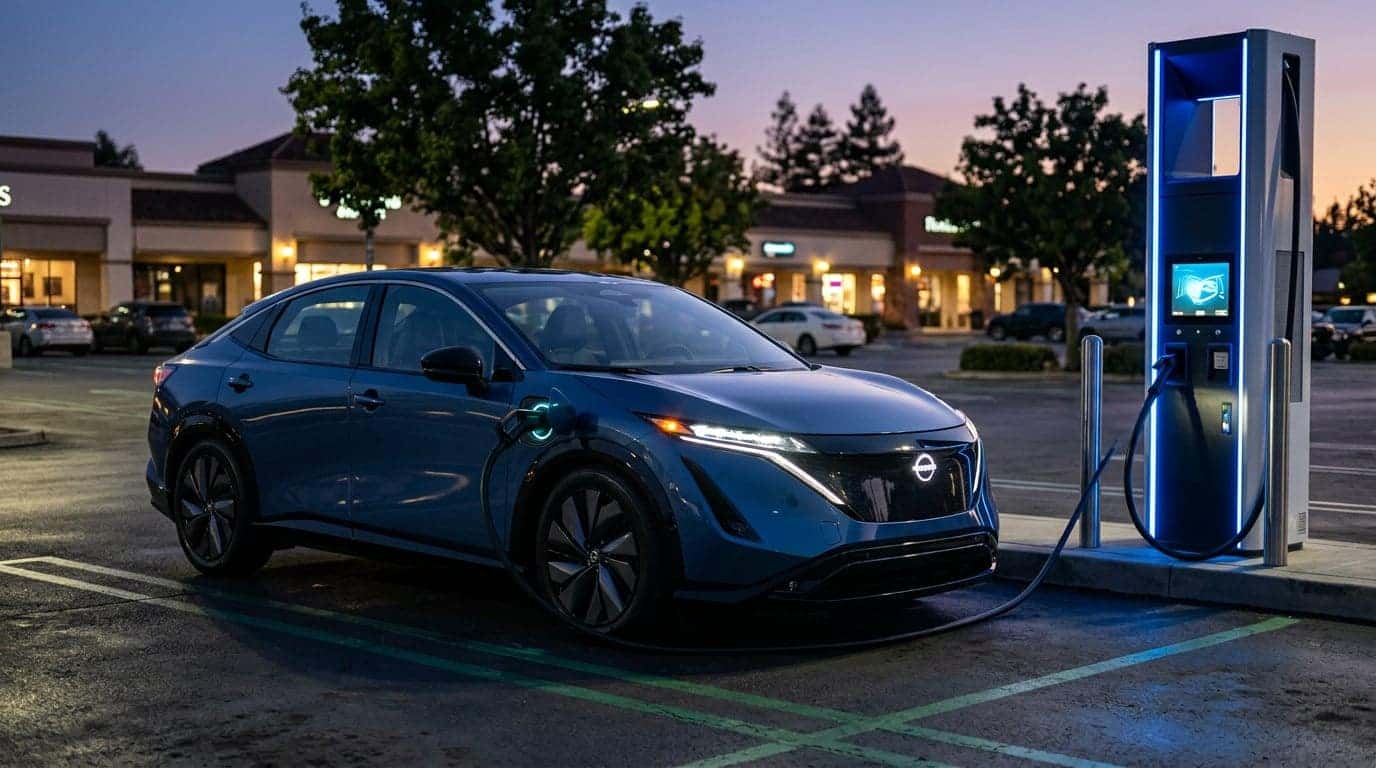
Nissan has not officially revealed, detailed, or confirmed specifications for an all-electric 2028 Altima sedan for the U.S. market. The latest confirmed model from the automaker is the gas-powered 2027 Altima, which continues to feature a 2.5-liter four-cylinder engine generating 188 hp alongside available all-wheel drive. Industry projections and production plans indicate that Nissan is phasing out traditional gas-powered mid-size sedans to make room for next-generation electric sedans built at its assembly facilities in Canton, Mississippi, but firm details regarding a 2028 release date, battery size, or standard equipment remain unconfirmed by the factory.
While an official debut remains pending, Nissan’s electric vehicle strategy focuses on replacing long-standing internal combustion nameplates with advanced battery-electric powertrains. The current 2027 Altima lineup retains popular features like Zero Gravity seats, standard smartphone connectivity, and driver-assist features such as ProPILOT Assist. These technology benchmarks provide a clear baseline for what drivers can expect when an electric sedan eventually joins the lineup.
For car buyers considering their options today, tracking model transition timelines helps ensure you select the right vehicle for your daily commute. If you want to check the availability of current mid-size sedans or discuss upcoming model year arrivals, you can get directions to our Gallatin showroom or give our staff a call directly at (615) 442-3090. Our team is always ready to share the latest manufacturer news as official announcements are released.
Table of Contents
- Is the 2028 Altima EV Faster Than Previous V6 or VC-Turbo Models?
- What Estimated Driving Range Will the 2028 Nissan Altima EV Offer?
- Is the 2028 Nissan Altima EV Eligible for Federal Tax Credits or Tennessee State Incentives?
- Does an Electric Altima Require Special Winter Maintenance?
- Common Questions About the All-Electric 2028 Nissan Altima
- Preparing for the Electric Transition at Newton Nissan of Gallatin
Is the 2028 Altima EV Faster Than Previous V6 or VC-Turbo Models?
An all-electric Altima is projected to deliver faster 0–60 mph acceleration than past V6 or VC-Turbo gas models due to the instant torque characteristics of electric drive units. Electric motors deliver their total torque output immediately from a complete stop, eliminating the brief lag experienced while a continuous variable transmission (CVT) ramps up engine RPM or a turbocharger builds boost pressure.
Past gas-powered performance variants, such as the 3.5-liter V6 and the variable-compression turbocharged 2.0-liter engine, achieved 0–60 mph sprints in the mid-5 to 6-second range. By comparison, standard 2.5-liter four-cylinder models with all-wheel drive register 0–60 times around 7.6 to 8.4 seconds. Dual-motor or high-output single-motor electric configurations routinely achieve 0–60 mph times in the sub-5-second territory, making an EV sedan distinctly quicker in everyday passing maneuvers and highway merges.
First-time EV shoppers stepping onto our sales floor frequently ask how single-speed electric powertrains handle sudden acceleration compared to traditional gas engines. Without gear shifts or engine noise under heavy throttle, electric acceleration provides continuous, linear power delivery that feels significantly faster from behind the wheel.
- Gas 2.5-liter Four-Cylinder: 188 hp and 180 lb-ft of torque, routed through a continuously variable transmission.
- Past Gas VC-Turbo Engine: 248 hp and 273 lb-ft of torque on premium fuel.
- Projected Electric Drivetrain: Instant electric torque with available dual-motor all-wheel drive for enhanced traction.
If you are currently deciding between an established internal combustion model and waiting for future electric options, exploring our latest new Nissan Altima models gives you a clear baseline for modern sedan performance and interior space. Buyers seeking immediate savings can also browse our pre-owned Nissan Altima inventory to find practical, comfortable commuting sedans with proven fuel economy.
What Estimated Driving Range Will the 2028 Nissan Altima EV Offer?
Initial industry expectations project an estimated driving range between 270 and 300 miles per charge for an electric Altima sedan, depending on the selected battery capacity and drive configuration. Single-motor front-wheel-drive variants focused on efficiency are expected to reach the upper end of that estimate, while dual-motor performance trims with higher output may sacrifice a small percentage of total range for increased traction and acceleration.
For commuters traveling from Portland into nearby employment centers, a real-world range of 270 to 300 miles easily covers multiple days of driving on a single charge. Modern battery management systems maintain consistent cabin climate control and battery conditioning without drastically draining the pack during routine stop-and-go driving.
Fast-charging capabilities will also play a critical role in practical usability. Future electric sedans are expected to support DC fast charging capable of replenishing the battery from 10 percent to 80 percent in approximately 20 to 30 minutes at public charging stations. Standard home charging using a Level 2 240-volt setup will allow owners to start each morning with a fully charged battery.
When planning for an EV, evaluating your daily driving habits helps determine whether an electric drivetrain fits your lifestyle. Drivers who trade in a conventional gas vehicle often find that home charging eliminates weekly gas station stops entirely. You can value your trade-in online to see how your current vehicle’s equity applies toward a new purchase, or take a look at our pre-owned Nissan sedan selection to review efficient commuting options available right now.
Is the 2028 Nissan Altima EV Eligible for Federal Tax Credits or Tennessee State Incentives?
A newly purchased electric sedan does not qualify for federal clean vehicle tax credits under IRC §30D, as Public Law 119-21 terminated federal EV tax credits for all vehicles acquired after September 30, 2025. Buyers purchasing a vehicle today cannot claim the historical $7,500 federal credit unless the purchase was completed under a binding written sales contract executed on or before September 30, 2025.
State-level incentives and local utility programs in Tennessee remain active and operate independently of federal tax policy. While Tennessee does not offer a direct state-funded cash rebate on electric vehicle purchases, localized power distributors working with the Tennessee Valley Authority (TVA) frequently provide home charger installation rebates. Additionally, qualified electric vehicles remain eligible for High Occupancy Vehicle (HOV) lane access privileges on state highways regardless of passenger count.
Understanding the overall cost of ownership requires looking beyond upfront purchase incentives to consider long-term operating savings:
- Fuel Cost Reductions: Charging an EV at residential electricity rates typically costs significantly less per mile than purchasing regular unleaded gasoline.
- Lower Scheduled Maintenance: Electric vehicles eliminate oil changes, spark plug replacements, timing belts, and complex multi-gear transmission services.
- Local Utility Rebates: Many local power companies offer statement credits or discount programs for installing a Level 2 home charging station.
To ensure clear transparency when planning your next vehicle purchase, our finance department provides straightforward tools to estimate monthly payments and complete an online credit application. If you currently own a vehicle and need routine upkeep or accessories, you can easily order genuine Nissan parts directly through our website.
Does an Electric Altima Require Special Winter Maintenance?
Electric sedans do not require specialized engine maintenance during cold weather, but winter driving calls for smart battery thermal management and routine upkeep. Unlike gas vehicles that rely on waste engine heat to warm the interior, an EV uses battery power to run cabin heaters. Utilizing thermal preconditioning—warming the cabin and battery while the vehicle is still plugged into a charger—preserves driving range before you head out on morning commutes along Shackle Island Road.
In Middle Tennessee’s mild climate, seasonal range loss is relatively muted compared to northern cold-belt regions. Drivers can maximize cold-weather efficiency by relying on heated front seats and a heated steering wheel, which use far less energy than running the main climate control blower at maximum temperature.
Standard winter maintenance items for an electric sedan remain very similar to traditional gas models:
- Tire Pressure Monitoring: Cold ambient temperatures lower tire pressure, making regular pressure adjustments essential for maintaining low rolling resistance and proper tread wear.
- Brake System Inspections: Because EV regenerative braking performs most of the daily deceleration, physical disc brakes are used less frequently and should be inspected for corrosion or debris accumulation.
- Cabin Air Filters: Replacing the cabin air filter annually ensures the defroster system clears windshield glass quickly and efficiently during frosty mornings.
- Wiper Blades and Washer Fluid: Keeping fresh wiper blades and cold-weather washer fluid installed preserves clear visibility during winter rain and road spray.
Routine tire rotations are particularly important for electric vehicles because instant motor torque places higher friction forces on the drive tires during acceleration.
Common Questions About the All-Electric 2028 Nissan Altima
Q: Where will Nissan manufacture its future electric sedan models?
Nissan plans to assemble its next-generation electric sedans at its Canton Vehicle Assembly Plant in Mississippi. The automaker has invested heavily in retooling the Canton facility to serve as a primary North American manufacturing hub for battery-electric passenger cars and utility vehicles. Local domestic assembly helps streamline vehicle delivery timelines to dealerships across the Southeast.
Q: What home charging equipment is needed for an electric sedan?
An electric sedan can charge using a standard 120-volt Level 1 household outlet, which adds about 3 to 5 miles of range per hour. Most EV owners opt to install a 240-volt Level 2 home charging station, which fully replenishes a battery pack overnight by adding 25 to 30 miles of range per hour. Level 2 installation requires a dedicated 40-amp or 50-amp circuit installed by a licensed electrician.
Q: How does battery warranty coverage compare to traditional powertrain warranties?
Federal regulations mandate that electric vehicle high-voltage batteries receive a minimum factory warranty of 8 years or 100,000 miles. This coverage protects against manufacturing defects and excessive battery capacity degradation over time. Traditional gas-powered sedans like the 2027 Altima include a 5-year/60,000-mile powertrain warranty alongside a 3-year/36,000-mile limited warranty.
Q: How does interior passenger room in an EV sedan compare to gas models?
Electric vehicle architectures built on flat skateboard battery platforms allow engineers to maximize interior space. Without a transmission tunnel or exhaust routing running down the center of the floorpan, an electric sedan offers a flat rear floor, generous rear legroom, and efficient center console storage. Trunk space remains spacious and practical, matching or exceeding the 15 cubic feet found in gas-powered mid-size sedans.
Q: How can buyers prepare their homes before taking delivery of an EV?
Before taking delivery of an electric vehicle, buyers should hire an electrician to evaluate their home electrical panel’s amp capacity. Identifying the ideal mounting location for a Level 2 charger near your parking spot streamlines installation. Additionally, contacting your local electric utility company allows you to check for available charger installation rebates or special off-peak time-of-use charging rates.
Preparing for the Electric Transition at Newton Nissan of Gallatin
Transitioning to an electric vehicle is an exciting step, and staying informed about official manufacturer timelines ensures you make the best purchase decision for your household. Whether you are planning ahead for future EV releases or looking for a practical, fuel-efficient sedan to drive today, our sales team is committed to providing straightforward guidance without any high-pressure tactics.
We invite you to visit us at 1461 Nashville Pike in Gallatin to explore our complete line of new and pre-owned vehicles. You can also call our team at (615) 442-3090 to ask questions about upcoming model year releases, schedule a test drive, or discuss trade-in options with our finance specialists. For drivers visiting our dealership near White House and surrounding communities, we look forward to serving as your trusted source for all your automotive needs.
0 comment(s) so far on Has Nissan Officially Revealed the 2028 Altima and Confirmed Specs?