

Are Older Vehicles More Likely to Need Brake Line Replacement?
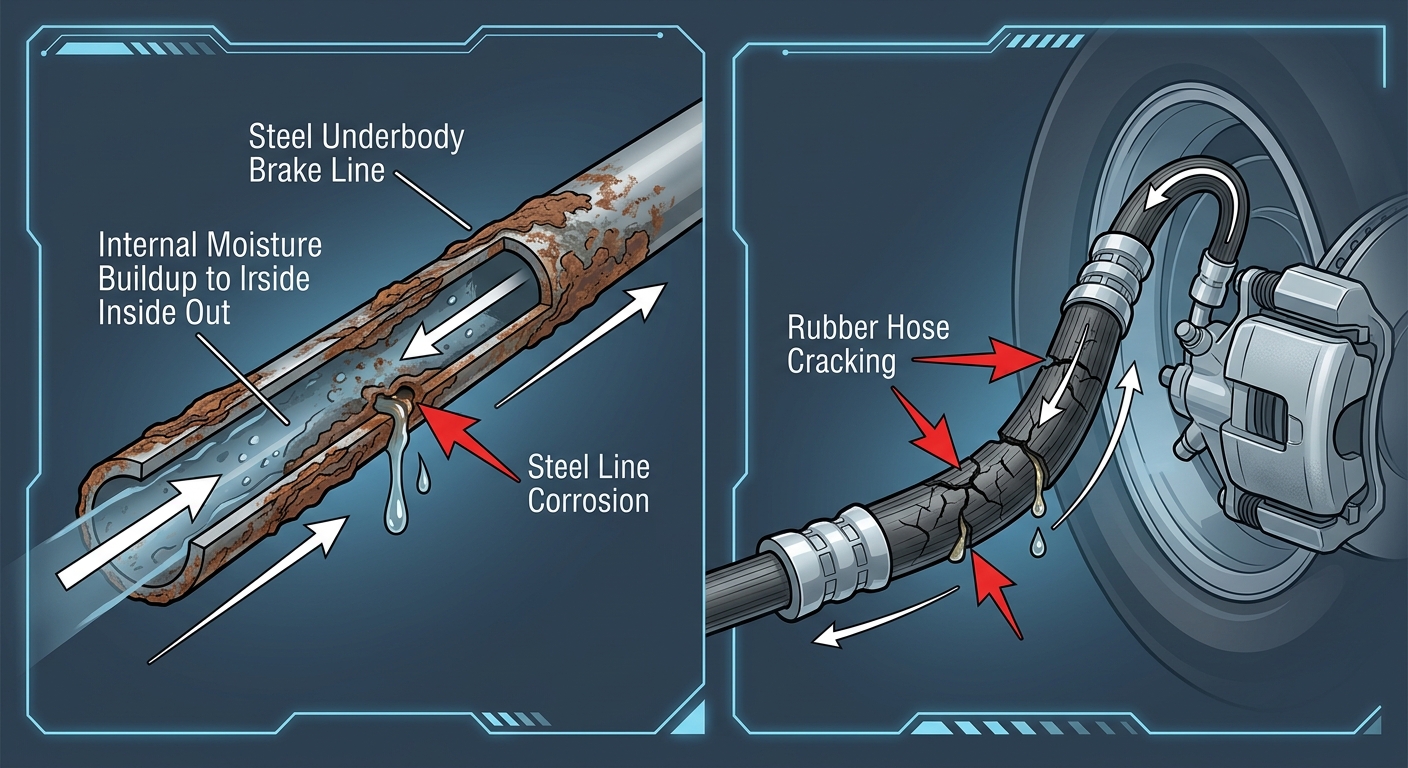
Older vehicles are significantly more likely to need brake line replacement because years of road exposure cause steel lines to rust and rubber flexible hoses to deteriorate. Continuous hydraulic pressure combined with internal moisture accumulation accelerates metal oxidation and rubber cracking, which eventually compromises system integrity and causes fluid leaks.
Automotive braking systems rely on rigid metal tubes and flexible rubber hoses to transmit hydraulic pressure from the master cylinder to the brake calipers and wheel cylinders. Over time, metal lines mounted along the frame and underbody face constant exposure to rain, road debris, and winter de-icing chemicals. Steel brake lines in regions with seasonal moisture or chemical road treatments experience surface oxidation that eventually turns into deep structural corrosion. Once rust penetrates the outer wall of the tubing, the wall thins until hydraulic pressure creates pinhole leaks or complete line ruptures.
Internal degradation is equally critical on older vehicles due to the chemical nature of brake fluid. Standard glycol-based brake fluid is hygroscopic, meaning it naturally absorbs moisture from the atmosphere over time through micro-pores in hoses and reservoir caps. When brake fluid is not flushed periodically, trapped water settles in low points of the metal lines. This internal moisture corrodes steel lines from the inside out, creating hidden weak spots that visual inspections from the outside might miss until fluid begins leaking.
Flexible rubber brake hoses at the wheel hubs also have a finite operational lifespan. Constant flexing during steering and suspension movement, combined with thermal cycling from heavy braking, causes external rubber to dry rot and develop surface cracks. Internally, aging rubber hoses can swell, deteriorate, or collapse, restricting fluid flow or trapping pressure at the caliper. Vehicle owners navigating rural farmland routes and damp creek crossings around Cross Plains frequently see accelerated undercarriage wear, making routine brake inspections essential as mileage increases.
If you are noticing changes in your vehicle’s stopping performance or want to stay ahead of rust concerns, our service team at Newton Nissan of Gallatin is ready to perform a comprehensive undercarriage inspection. You can reach us at (615) 442-3090 to speak directly with an advisor, or stop by our Gallatin showroom location to discuss routine system care. If you are considering upgrading your daily drive entirely, explore our current selection of new Nissan models equipped with advanced driver-assist systems designed to protect your family on every trip.
Table of Contents
- How Do You Spot the Warning Signs of a Damaged Brake Line?
- Is It Safe to Drive With a Small Brake Line Leak?
- What Are the Technical Specs and Differences in Brake Line Materials?
- How Long Do Metal Brake Lines Last and How Are They Serviced?
- Quick Answers to Common Brake Line Questions
- Keep Your Braking System Reliable With Expert Maintenance
How Do You Spot the Warning Signs of a Damaged Brake Line?
Identifying a damaged brake line requires watching for a soft or spongy pedal, fluid puddles under the frame, visible rust flaking along the undercarriage, or an illuminated dashboard brake warning light. Any sudden drop in fluid level in the master cylinder reservoir or increased stopping distance signals an urgent pressure loss in the hydraulic circuit.
The most noticeable symptom of a compromised line is a dramatic change in pedal feel. In a healthy system, stepping on the pedal creates firm, immediate resistance as hydraulic fluid presses pads against brake rotors. When a brake line develops a pinhole leak or allows air into the system, hydraulic pressure drops, causing the pedal to feel mushy or sink all the way to the floorboard without slowing the vehicle properly. Air compresses under force while fluid does not, creating that unsafe, spongy sensation underfoot.
Visual indicators on the ground or under the chassis also provide clear proof of brake line damage. Clear or light amber fluid pooling beneath the frame rails or near the inside of the tires points directly to an active line or caliper leak. Older brake fluid that has absorbed heat and debris appears dark brown or black. Along the underbody, thick rust flaking or damp spots along the metal lines indicate that severe oxidation has breached the protective coating. Drivers navigating the rolling farm hills around Westmoreland often subject their vehicle undercarriages to road salt and gravel spray, which can strip protective line coatings and accelerate rust formation.
Another warning sign occurs when a vehicle pulls noticeably to one side during braking. If a flexible hose at one wheel hub collapses internally or restricts fluid delivery, the opposite wheel performs all the stopping work, pulling the steering wheel sideways. If you observe any of these symptoms while evaluating a pre-owned car or managing your daily vehicle, our service department can pinpoint the exact source of leakage. Drivers shopping for a dependable used vehicle can also check our pre-owned inventory for thoroughly inspected models ready for daily commuting.
Is It Safe to Drive With a Small Brake Line Leak?
Driving with any size brake line leak is extremely unsafe because modern automotive braking systems rely on sealed hydraulic pressure between 1,000 to 2,000 PSI to stop your vehicle. Even a tiny pinhole leak prevents the system from maintaining operating pressure, rapidly introducing air into the lines and leading to sudden, total brake failure.
Modern vehicles use a dual-circuit master cylinder designed to split braking pressure between front and rear wheels or diagonally across the vehicle. While this safety design ensures that a single line failure does not lose all four brakes instantly, a leak in one circuit still reduces your overall stopping power by at least half. As fluid continues to spray out under high pressure, the master cylinder reservoir drains rapidly. Once the fluid level drops below the intake ports, air enters the main cylinder, causing complete loss of pedal resistance across the entire system.
When vehicle owners ask our service team whether a tiny fluid damp spot on the frame rail is manageable for a few extra miles, we always emphasize that hydraulic pressure drops immediately once the system loses its seal. A small leak under low effort can turn into a complete line blow-out during an emergency sudden stop when line pressures spike toward 2,000 PSI.
Attempting to drive a vehicle with an active brake fluid leak puts you, your passengers, and other drivers at extreme risk. If you suspect a line failure while on the road, bring the vehicle to a safe stop, avoid driving further, and utilize certified roadside towing services to reach a professional repair facility. For drivers assessing their current vehicle’s long-term upkeep expenses against replacing it, our team makes it easy to evaluate your options by evaluating your current trade-in value online.
What Are the Technical Specs and Differences in Brake Line Materials?
Standard automotive brake lines utilize double-walled steel tubing in 3/16-inch or 1/4-inch outer diameters designed to handle normal fluid pressure up to 2,000 PSI and burst pressures exceeding 5,000 PSI. Flexible wheel ends use multi-layer reinforced rubber or braided stainless steel hoses, with modern steel lines frequently featuring zinc coating or PVF coating (polyvinyl fluoride) for enhanced corrosion resistance.
The two standard line sizes serve distinct roles within the hydraulic circuit:
- 3/16-inch outer diameter tubing is the standard size used for individual wheel lines, ABS control module feeds, and passenger car hydraulic circuits. It provides precise pressure delivery while maintaining compact routing along subframes.
- 1/4-inch outer diameter tubing is primarily utilized for main supply lines running from the master cylinder to rear proportioning valves on larger trucks and commercial vehicles where higher fluid volume transfer is required.
Metal lines differ significantly based on their alloy composition and outer surface coatings:
| Brake Line Material | Burst Pressure Rating | Corrosion Resistance | Primary Application |
|---|---|---|---|
| Standard Galfan Steel | Exceeds 5,000 PSI | Moderate (Standard factory coating) | OEM passenger cars and light trucks |
| PVF-Coated Steel | Exceeds 5,000 PSI | High (Polymer barrier protection) | Modern salt-belt vehicles and light trucks |
| Copper-Nickel Alloy (NiCopp) | Exceeds 5,000 PSI | Exceptional (Rust-proof alloy) | High-durability replacement lines |
| Stainless Steel Braided | Exceeds 6,000 PSI | Superior (Outer wire mesh shield) | Performance flexible hose replacements |
While standard steel lines come with a basic zinc or Galfan coating, premium replacement lines use PVF coating—a green polymer layer that resists stone chips, road chemicals, and moisture penetration. For flexible connections at the steering knuckles, standard multi-layer rubber hoses expand slightly under maximum pedal force. Upgrading to braided stainless steel flexible lines prevents hose expansion under heat and pressure, delivering a firmer pedal feel and superior resistance to external debris.
Whether you are performing routine maintenance or replacing worn undercarriage components, choosing factory-specified replacement materials ensures proper fitment and long-term durability. If you are planning major vehicle repairs or upgrading to a newer model with advanced safety tech, you can explore payment flexibility through our online financing application.
How Long Do Metal Brake Lines Last and How Are They Serviced?
Metal brake lines typically last between 10 to 15 years in regions with seasonal moisture or road salt exposure, whereas vehicles in dry, mild climates can retain factory steel lines for the entire lifespan of the chassis. Proper service involves flushing hygroscopic brake fluid every two years or 30,000 miles to remove internal moisture, along with routine undercarriage washing and biannual corrosion inspections.
Routine line maintenance starts with preventive flushing of the brake fluid. Because fluid absorbs airborne water over time, fresh fluid keeps internal rust from forming along the steel tube walls. Nissan factory maintenance guidelines recommend replacing brake fluid every 30,000 miles or 24 months. During this service, technicians force fresh, moisture-free fluid through the entire hydraulic circuit, expelling old, contaminated fluid and trapped air bubbles from every bleeder valve.
External maintenance focuses on underbody washing and regular visual evaluations. Cleaning the undercarriage within a few days of heavy road salt exposure washes away corrosive chemical buildup from frame rails and line brackets. During every engine oil change or tire rotation, technicians check exposed metal lines for flaking rust, damp fittings, or rubber hose cracking.
When a brake line suffers severe rust, spot patching or applying compression fittings is dangerous and prohibited by industry safety standards. A corroded section indicates that the surrounding metal line has thinned elsewhere. Safe repair requires replacing the entire length of compromised tubing with proper double-flared ends and corrosion-resistant line materials to restore full hydraulic integrity.
Quick Answers to Common Brake Line Questions
Q: Does a spongy brake pedal always mean a brake line is leaking?
A spongy brake pedal usually indicates air in the hydraulic circuit, which often stems from a leaking brake line, but it can also be caused by a failing master cylinder internal seal, low fluid level, or a leaking caliper piston. When air enters the lines, it compresses under force, creating a soft pedal sensation. A thorough pressure check by a technician will isolate whether the leak is external along a line or internal to the master cylinder.
Q: How often should I have my vehicle’s brake lines inspected?
Brake lines should undergo a visual inspection during every oil change or every 5,000 to 7,500 miles. Vehicles operating in wet environments, agricultural dust, or road salt conditions benefit from detailed undercarriage inspections twice a year—once before winter and once in spring—to catch early surface rust before it breaches the line wall.
Q: What color is brake fluid when it is leaking from a line?
Fresh brake fluid is clear with a light yellow or amber tint and feels oily to the touch. As brake fluid ages and absorbs heat, moisture, and micro-particles from rubber hoses, it darkens into a deep brown or black color. Spotting a puddle of clear amber or dark brown oily fluid on the driveway under the frame rails points directly to a hydraulic leak.
Q: Can I replace a single section of a rusted brake line with a brass compression fitting?
No, using brass compression fittings on automotive brake lines is illegal in many states and violates vehicle safety standards. Automotive brake systems operate at extreme pressures between 1,000 to 2,000 PSI, which can easily blow a compression fitting off the line during an emergency stop. Damaged lines must be replaced with seamless tubing featuring approved inverted double-flares or ISO bubble flares.
Q: Where can I get genuine OEM brake lines and components for my vehicle?
You can source factory-engineered brake lines, flexible hoses, calipers, and fresh fluid directly through our service center. Purchasing genuine components guarantees precise length, pre-formed bends, correct flare fittings, and factory corrosion coatings designed specifically for your vehicle model. Drivers looking for replacement parts can start by ordering genuine parts online.
Q: What makes certified dealer service different when repairing brake systems?
Certified dealership service facilities utilize factory-trained technicians, specialized pressure-bleeding tools, and genuine original equipment manufacturer parts designed specifically for your vehicle’s braking system. Our dealership takes pride in supportive care, transparent service, and giving back through our local community involvement. Every pre-owned vehicle we service also meets rigorous inspection criteria, similar to the standards enforced in our Newton Certified Pre-Owned program.
Keep Your Braking System Reliable With Expert Maintenance
Maintaining healthy brake lines, fresh fluid, and durable flexible hoses is essential for keeping your vehicle safe, responsive, and ready for daily travel. Catching surface corrosion early and adhering to a two-year fluid replacement interval prevents unexpected pressure loss and protects your vehicle’s overall long-term value.
Our factory-trained service team at Newton Nissan of Gallatin is dedicated to providing thorough inspections, transparent pricing, and expert brake care tailored to your driving habits. Whether you need a simple brake fluid flush, an undercarriage rust inspection, or a complete hydraulic repair, we use genuine OEM parts to ensure total peace of mind on the road.
Schedule your next service visit with us today or stop by our Gallatin address to keep your braking system performing at its best. If you have immediate questions about pedal feel, warning lights, or maintenance schedules, give our advisors (615) 442-3090 a quick call to book your appointment.
0 comment(s) so far on Are Older Vehicles More Likely to Need Brake Line Replacement?