

Can a Proper Diagnosis and Repair Prevent a Check-Engine Light From Returning?
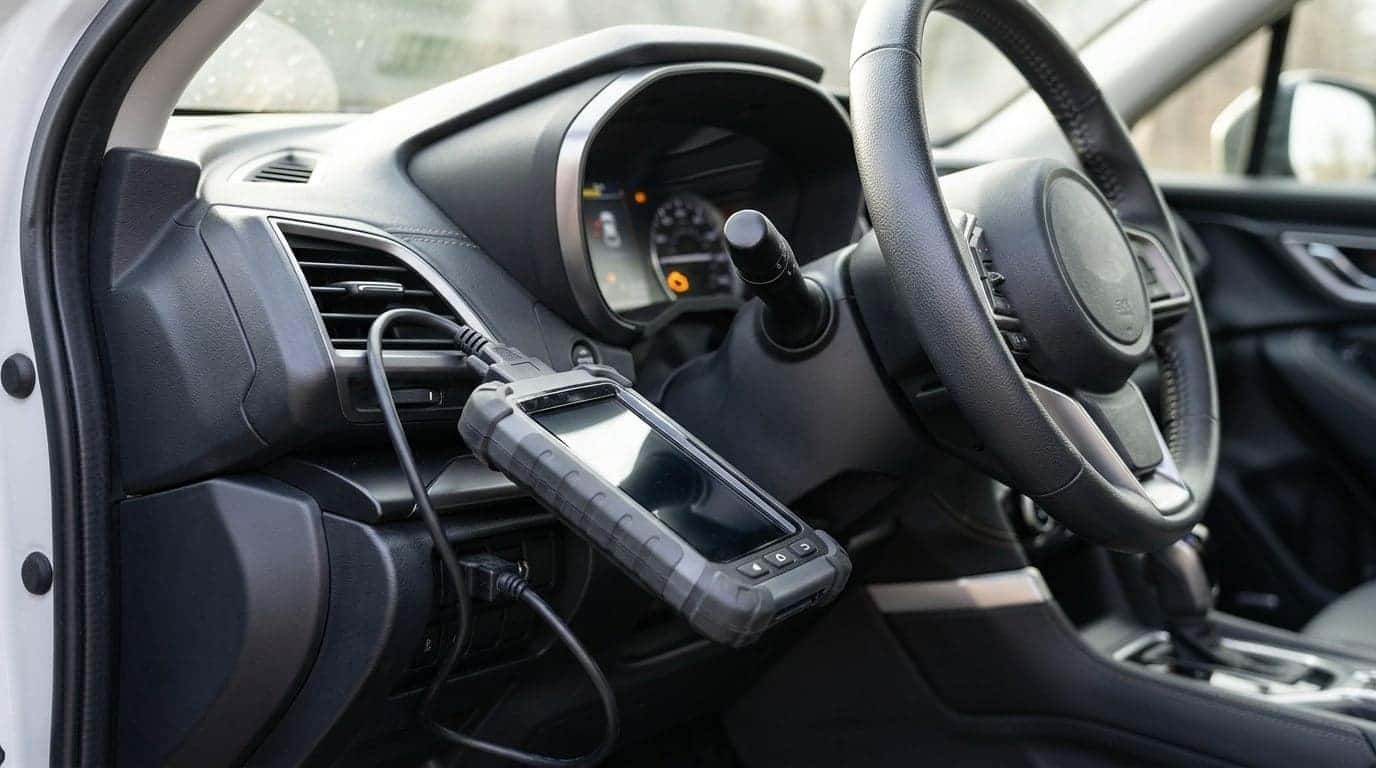
A proper diagnosis and precise repair prevent a check-engine light from returning by identifying and fixing the root failure mechanism rather than clearing diagnostic trouble codes or replacing a single triggered sensor. When technicians test the complete circuit, verify fuel trims, inspect mechanical vacuum integrity, and validate repair operations under specific driving conditions, recurring warning lights are effectively eliminated.
A persistent illuminated dashboard light creates frustration for drivers commuting daily from Cross Plains down the highway, especially after paying for a recent service visit. Many owners assume a returning warning light means the previous repair failed or that the initial technician installed an incorrect component. In reality, modern powertrains rely on interconnected electronic networks where a single mechanical flaw can trigger secondary sensor alerts across multiple vehicle control systems. Replacing a component listed in a trouble code without verifying underlying system health often leaves the true failure active, causing the vehicle’s engine control unit (ECU) to illuminate the warning light again once system monitors complete their automated testing loop.
Eliminating repeated failures requires addressing how diagnostic trouble codes function. Diagnostic codes serve as directional flags pointing toward a malfunctioning system loop rather than an explicit command to install a replacement part. For example, a code indicating a lean fuel mixture could stem from an oxygen sensor, but it is equally likely caused by a cracked vacuum line, a dirty mass airflow sensor, or an intermittent fuel pump relay. When our service team performs diagnostic evaluations at our service center located at 1461 Nashville Pike in Gallatin, we test every related component to confirm the precise point of failure before starting work. Drivers seeking guidance on active warning lights can reach out through a quick phone call to discuss observable symptoms with our advisors.
Vehicle control units run specific drive-cycle monitors before marking a system test complete. Certain evaporative emissions or catalytic converter monitors require steady highway speeds, specific ambient temperatures, and precise fuel tank levels before executing diagnostic checks. If a repair clears stored data without resolving the underlying cause, the light remains off only until the vehicle meets those exact highway driving parameters again. Systematic testing ensures that every variable, from wiring harness resistance to mechanical sealing, meets factory operational specs before the vehicle leaves the shop.
Table of Contents
- How Diagnostic Scans, Active Codes, and Pending DTCs Identify Root Causes
- What Is the Average Cost of Automotive Diagnostic Services?
- What Is the Most Expensive Repair Caused by Deferred Vehicle Maintenance?
- When Are High-Quality Aftermarket Parts Preferable to Factory OEM Components?
- Are Software Updates Required to Resolve Recurring Vehicle Electrical Glitches?
- Common Questions About Repair Warranties and Stopping Recurring Mechanical Failures
How Diagnostic Scans, Active Codes, and Pending DTCs Identify Root Causes
A comprehensive diagnostic scan isolates root causes by analyzing live sensor telemetry, freeze-frame operating data, active diagnostic trouble codes (DTCs), and pending codes before any mechanical teardown begins. This structured approach distinguishes between an active hard failure and an intermittent electrical variance, allowing technicians to target the exact failing component.
Onboard diagnostic systems categorize operational faults into active codes and pending codes to track powertrain conditions accurately:
- Active diagnostic trouble codes represent confirmed failures detected during the current or recent drive cycles that immediately trigger the illuminated check-engine light.
- Pending diagnostic trouble codes record intermittent readings or soft faults that have occurred once but require a second consecutive failure under identical driving conditions before illuminating the dashboard warning light.
- Freeze-frame data captures a snapshot of critical vehicle parameters—including engine RPM, coolant temperature, vehicle speed, and fuel trim values—at the exact moment a fault code registers.
- Live data streaming allows technicians to observe real-time sensor performance, comparing expected OEM parameters against actual signal output during simulated load conditions.
Distinguishing between active and pending codes prevents unnecessary parts replacement. For instance, a pending code for an intermittent cylinder misfire might only appear under heavy acceleration during steep grade climbs in Westmoreland. By reviewing freeze-frame records, technicians can pinpoint whether the misfire occurred due to ignition coil breakdown under thermal load, a failing fuel injector, or a drop in fuel pressure.
Clearing trouble codes with a basic hand-held scanner merely erases stored historical data and resets monitor status; it does not repair mechanical wear or electrical open circuits. Once the driver completes the necessary drive-cycle requirements, the ECU re-evaluates the system and triggers the light again. Pinpointing root causes protects long-term mechanical reliability and preserves vehicle trade-in value when you decide to value your trade-in for a newer vehicle equipped with modern driver-assist features and active safety tech.
What Is the Average Cost of Automotive Diagnostic Services?
Professional automotive diagnostic service fees nationwide average between $80 and $150 per hour, reflecting the specialized testing equipment, advanced scope tooling, and technical expertise needed to isolate complex mechanical and electrical failures. Investing in professional diagnostics prevents higher cumulative expenses caused by guessing and repeatedly replacing healthy parts.
Basic code scanning offered at auto parts stores simply reads the surface DTC string without testing circuit continuity, fuel pressure, or sensor voltage signal waveforms. Diagnostic charges cover the dedicated time a certified technician spends running pin-point tests, checking technical service bulletins, analyzing live data logs, and performing smoke tests or compression checks. In most professional service environments, diagnostic fees are applied directly toward the total cost of the approved repair work.
When evaluating long-term operational costs across different crossover trims, precise maintenance planning keeps total cost of ownership manageable. For model configuration reference, the 2026 Nissan Rogue lineup offers diverse trim levels with specified starting prices:
| Trim Level | Drivetrain | Base MSRP | Destination Charge |
|---|---|---|---|
| Rogue S FWD | Front-wheel drive | $29,490 | $1,575 |
| Rogue S AWD | All-wheel drive | $30,890 | $1,575 |
| Rogue SV FWD | Front-wheel drive | $30,490 | $1,575 |
| Rogue SV AWD | All-wheel drive | $31,890 | $1,575 |
| Rogue Rock Creek AWD | All-wheel drive | $34,390 | $1,575 |
| Rogue Dark Armor FWD | Front-wheel drive | $33,340 | $1,575 |
| Rogue Dark Armor AWD | All-wheel drive | $34,740 | $1,575 |
| Rogue SL FWD | Front-wheel drive | $35,590 | $1,495 |
| Rogue SL AWD | All-wheel drive | $36,990 | $1,495 |
| Rogue Platinum AWD | All-wheel drive | $39,390 | $1,575 |
Complex electrical diagnostics—such as tracking down parasitic battery drains or intermittent CAN-bus communication drops—can require two to three hours of dedicated lab-scope testing. If an electrical issue stems from severe battery degradation, drivers can arrange targeted maintenance through our team to explore battery services and electrical system testing. Planned maintenance expenses can also be factored into broader ownership budgets when customers choose to prequalify online for vehicle financing. Paying for accurate diagnostic testing upfront ensures that the actual failure point is repaired right the first time, protecting your vehicle’s engine and transmission from progressive wear.
Pricing
Pricing by trim
| Feature | Dark Armor | Dark Armor AWD | Platinum AWD | Rock Creek AWD |
|---|---|---|---|---|
| Base MSRP | $33,340 | $34,740 | $39,390 | $34,390 |
| Destination charge | $1,575 | $1,575 | $1,575 | $1,575 |
Pricing (continued)
| Feature | S AWD | S FWD | SL AWD | SL FWD |
|---|---|---|---|---|
| Base MSRP | $30,890 | $29,490 | $36,990 | $35,590 |
| Destination charge | $1,575 | $1,575 | $1,495 | $1,495 |
Pricing (continued)
| Feature | SV AWD | SV FWD |
|---|---|---|
| Base MSRP | $31,890 | $30,490 |
| Destination charge | $1,575 | $1,575 |
What Is the Most Expensive Repair Caused by Deferred Vehicle Maintenance?
Complete engine replacement resulting from severe thermal damage, oil starvation, or a snapped timing belt is the single most expensive automotive repair caused by deferred maintenance, often costing between $4,000 and $10,000 or more depending on engine displacement and configuration. Neglecting routine fluid changes and inspection intervals allows minor mechanical wear to compound into catastrophic structural failures.
Engine oil breaks down over time, losing its viscosity and ability to suspend contaminants. Operating a vehicle past its recommended oil-change interval creates heavy sludge deposits that clog narrow internal oil passages, starving crankshaft bearings and variable valve timing actuators of essential lubrication. Similarly, deferring coolant flushes allows protective corrosion inhibitors to deplete. According to published maintenance guides, factory-fill engine coolant replacement is scheduled at 105,000 miles or 7 years, followed by service every 75,000 miles or 5 years. Ignoring degraded coolant leads to internal radiator clogging, head gasket failure, and warped cylinder heads.
Automatic transmissions and continuously variable transmissions (CVTs) are equally sensitive to fluid neglect. Nissan maintenance guidance recommends inspecting CVT fluid deterioration every 60,000 miles under severe operating conditions such as frequent towing, heavy stop-and-go traffic, or mountain driving. If that inspection is skipped under severe use, guidance calls for fluid replacement at 60,000 miles to prevent fluid overheating and belt slippage.
Vehicle owners driving high-mileage models can avoid unexpected mechanical expenses by staying ahead of service schedules or exploring fresh options in our new Nissan inventory. For budget-conscious households, exploring reliable options in our pre-owned inventory provides access to fully inspected vehicles backed by verified service histories.
Key maintenance steps that prevent severe mechanical failures include:
- Changing engine oil and replacing filters according to model-specific operating conditions and severe-service guidelines.
- Flushing brake fluid every 10,000 miles or 12 months under severe service conditions, while inspecting brake pads and rotors every 5,000 miles.
- Monitoring cooling system hoses, water pump operation, and serpentine drive belts for micro-cracking or tension loss.
- Performing routine transmission fluid checks and replacing fluid when operating under heavy load or continuous towing environments.
Fuel Economy
Fuel economy and range by trim
| Feature | Dark Armor | Dark Armor AWD | Platinum AWD | Rock Creek AWD |
|---|---|---|---|---|
| MPG | 29 city / 36 hwy / 32 combined | 28 city / 35 hwy / 31 combined | 28 city / 35 hwy / 31 combined | 27 city / 32 hwy / 29 combined |
Fuel Economy (continued)
| Feature | S AWD | S FWD | SL AWD | SL FWD |
|---|---|---|---|---|
| MPG | 28 city / 35 hwy / 31 combined | 29 city / 36 hwy / 32 combined | 28 city / 35 hwy / 31 combined | 29 city / 36 hwy / 32 combined |
Fuel Economy (continued)
| Feature | SV AWD | SV FWD |
|---|---|---|
| MPG | 28 city / 35 hwy / 31 combined | 29 city / 36 hwy / 32 combined |
When Are High-Quality Aftermarket Parts Preferable to Factory OEM Components?
High-quality aftermarket parts are preferable to factory original equipment manufacturer (OEM) components when upgrading specific performance systems for heavy-duty applications—such as specialized brake pads for continuous trailer towing or heavy cargo hauling—or when sourcing replacement components for older vehicles where factory OEM parts have been discontinued.
OEM parts are engineered to meet original factory specs for balanced daily operation, noise reduction, and general longevity. However, specialized driving conditions often demand upgraded component characteristics. For example, heavy truck owners operating a 2026 Nissan Frontier with its 3.8L V6 engine rated for 6,680 lbs towing capacity may prefer severe-duty aftermarket brake pads featuring high-friction ceramic-metallic compounds. These specialized pads reduce brake fade during repeated heavy deceleration on steep highway descents better than standard commuter brake friction formulations.
Aftermarket manufacturers also develop re-engineered replacement parts to address known factory design flaws in older vehicle models, such as reinforced aluminum thermostat housings replacing plastic OEM housings that degrade under high thermal cycles. However, for critical electronic sensors, engine control modules, and internal engine hardware, genuine OEM components remain recommended because they match exact factory signal voltages and bus protocols.
Vehicle owners looking for specific maintenance parts or heavy-duty accessories can easily order genuine Nissan parts online directly through our dedicated department. Supporting local driver safety and community education remains central to our mission, as seen when local students enter our high school car giveaway program held annually to reward academic achievement. Selecting between OEM and high-tier aftermarket components depends on matching component engineering to your daily driving demands.
Are Software Updates Required to Resolve Recurring Vehicle Electrical Glitches?
Software updates are frequently required to resolve recurring electrical glitches, false check-engine lights, infotainment freezes, and sensor communication errors in modern computer-controlled vehicles. Factory technical service bulletins (TSBs) regularly instruct dealership technicians to reprogram engine control modules and body control units with updated code to eliminate software bugs and signal timing anomalies.
Modern vehicles contain dozens of microprocessors communicating across high-speed controller area network (CAN) lines. Complex interactions between driver-assist technologies, transmission shift logic, fuel-injection timing, and cabin infotainment systems mean that software logic errors can mimic physical hardware failures. For example, a vehicle might register a recurring sensor code simply because the original ECU software threshold for signal latency was calibrated too narrowly for real-world environmental shifts.
Reprogramming electronic control modules solves these issues through several precise mechanisms:
- Adjusting voltage tolerance windows for oxygen sensors, mass airflow meters, and throttle position sensors to prevent false trouble codes.
- Refining automatic transmission shift timing and torque converter lockup algorithms to smooth power delivery and reduce internal fluid temperatures.
- Updating driver-assist camera and radar calibration software to enhance adaptive cruise control and forward collision warning accuracy.
- Patching Bluetooth and smartphone connectivity protocols within cabin infotainment systems to restore seamless device pairing and touchscreen responsiveness.
Hardware replacements will not prevent recurring electrical symptoms if the underlying fault exists inside the ECU software logic. When software updates are published alongside TSBs, authorized service centers flash the updated calibration directly into the control module, permanently resolving system glitches without replacing functional mechanical components.
Engine & Performance
Powertrain specs by trim
| Feature | Dark Armor | Dark Armor AWD | Platinum AWD | Rock Creek AWD |
|---|---|---|---|---|
| Engine | 1.5L | 1.5L | 1.5L | 1.5L |
| Horsepower | 201 hp | 201 hp | 201 hp | 201 hp |
| Torque | 225 lb-ft | 225 lb-ft | 225 lb-ft | 225 lb-ft |
| Transmission | Xtronic | Xtronic | Xtronic | Xtronic |
| Drivetrain | Front-wheel drive | All-wheel drive | All-wheel drive | All-wheel drive |
Engine & Performance (continued)
| Feature | S AWD | S FWD | SL AWD | SL FWD |
|---|---|---|---|---|
| Engine | 1.5L | 1.5L | 1.5L | 1.5L |
| Horsepower | 201 hp | 201 hp | 201 hp | 201 hp |
| Torque | 225 lb-ft | 225 lb-ft | 225 lb-ft | 225 lb-ft |
| Transmission | Xtronic | Xtronic | Xtronic | Xtronic |
| Drivetrain | All-wheel drive | Front-wheel drive | All-wheel drive | Front-wheel drive |
Engine & Performance (continued)
| Feature | SV AWD | SV FWD |
|---|---|---|
| Engine | 1.5L | 1.5L |
| Horsepower | 201 hp | 201 hp |
| Torque | 225 lb-ft | 225 lb-ft |
| Transmission | Xtronic | Xtronic |
| Drivetrain | All-wheel drive | Front-wheel drive |
Common Questions About Repair Warranties and Stopping Recurring Mechanical Failures
Q: What repair warranties do independent auto repair shops typically offer?
Independent auto repair shops typically offer nationwide repair warranties ranging from 12 months or 12,000 miles up to 36 months or 36,000 miles covering both installed parts and labor. Coverage terms vary significantly by facility, with some warranties restricted solely to local shop locations while others belong to national repair networks that honor warranty claims across state lines. Understanding specific coverage limits helps drivers evaluate warranty protection before approving major mechanical work.
Q: Why does a check-engine light stay off for several days before turning back on?
A check-engine light often stays off for several days after service because the vehicle’s engine computer requires specific driving conditions—known as drive cycles—to complete automated self-diagnostic tests for systems like evaporative emissions or catalytic performance. If a repair was incomplete or an intermittent fault exists, the light remains off until those exact speed, fuel level, and operating temperature parameters are met again during routine driving.
Q: How do technical service bulletins differ from official vehicle safety recalls?
Technical service bulletins (TSBs) are recommended repair procedures issued by vehicle manufacturers to help technicians diagnose and fix known non-safety operational issues, software glitches, or component wear patterns. Safety recalls, by contrast, are federally mandated actions triggered when a defect poses an unreasonable safety risk or fails to meet federal motor vehicle safety standards, requiring the manufacturer to perform repairs free of charge regardless of warranty status.
Q: Can driving short distances repeatedly trigger severe service maintenance requirements?
Yes, repeatedly driving short distances under five miles prevents the engine and exhaust system from reaching full operating temperature, allowing moisture and unburned fuel to accumulate in the engine oil. Nissan maintenance guidance classifies short trips, extensive idling, towing, and dusty-road driving as severe operating conditions, requiring more frequent engine oil changes, spark plug inspections, and fluid replacements to protect long-term mechanical reliability.
Q: What is the benefit of performing live-data logging during a diagnostic test drive?
Live-data logging records real-time sensor signals, ignition timing, fuel trims, and boost pressures while the vehicle operates under real-world road loads, uphill acceleration, or specific thermal conditions. Capturing live data allows technicians to catch momentary voltage drops or sensor signal glitches that do not last long enough to set a permanent fault code, ensuring accurate identification of root failure mechanisms.
Preventing recurring mechanical failures begins with accurate diagnostic testing, adherence to factory maintenance schedules, and quality component selection tailored to your driving style. Our factory-trained service team at Newton Nissan of Gallatin is dedicated to keeping your vehicle running smoothly on every journey. Drivers can stop by our local Gallatin service department for complete vehicle inspections or give our team a direct phone call to speak with a service advisor today. To learn more about our local values and team initiatives, feel free to explore our community involvement program and discover how we support local drivers throughout the region.
0 comment(s) so far on Can a Proper Diagnosis and Repair Prevent a Check-Engine Light From Returning?