

What Are the Primary Symptoms of Carbon Buildup in a GDI Engine?
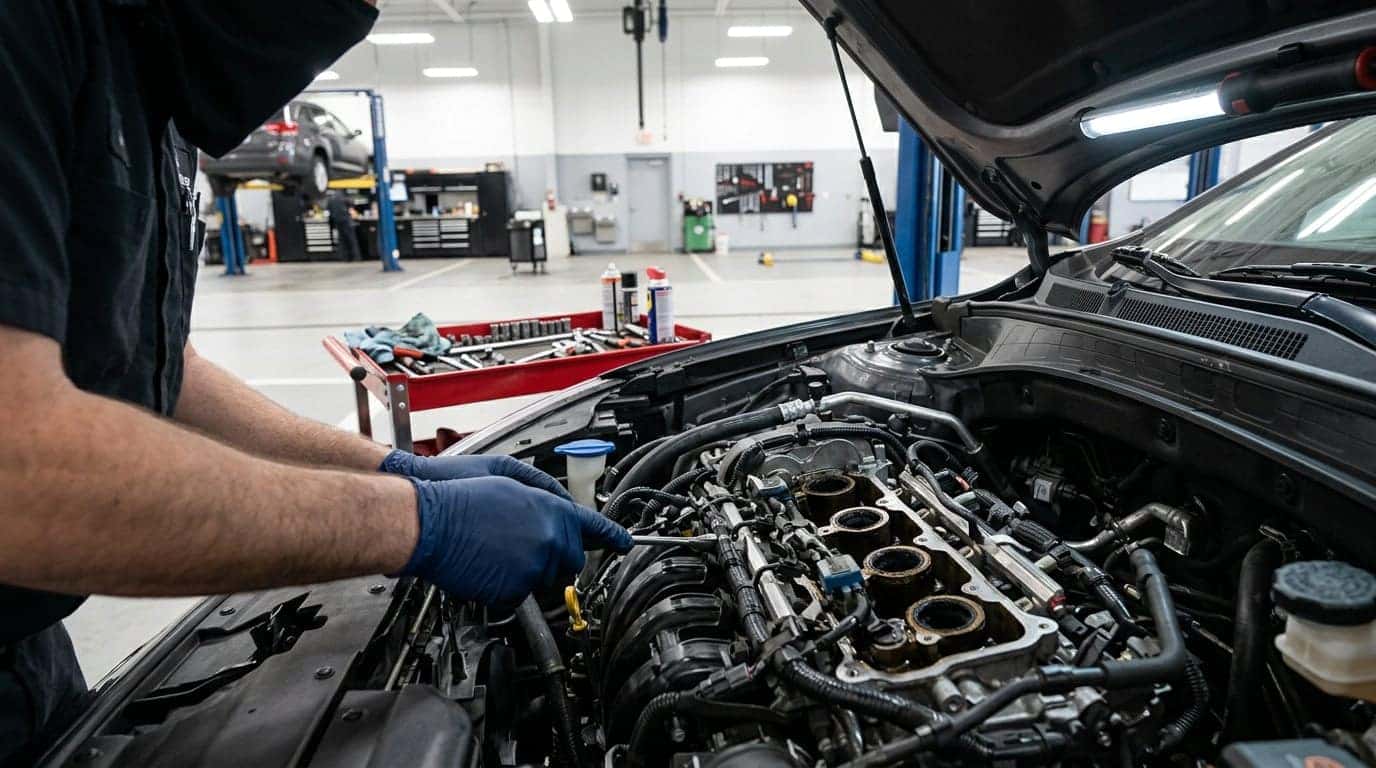
The primary symptoms of carbon buildup in a Gasoline Direct Injection (GDI) engine include a noticeably rough engine idle, cold-start hesitation, persistent cylinder misfires, reduced overall horsepower, and a sudden drop in fuel efficiency. Drivers may also notice an illuminated check engine light on the dashboard, as carbon deposits restrict intake valve airflow and disrupt the precise air-fuel ratio needed for smooth combustion.
When carbon deposits accumulate on the intake valves, they act like a hard, porous sponge. During a cold start, these crusty deposits absorb a portion of the incoming atomized fuel before it can reach the combustion chamber. This creates a temporary lean air-fuel mixture that causes the engine to stumble, shake, or misfire when first started in the morning. As the engine warms up to operating temperature, the performance issue may temporarily smooth out, but the underlying physical restriction remains on the valve stems.
As the buildup thickens, airflow into the engine cylinders becomes severely restricted and turbulent. You may experience a hesitation or “flat spot” when pushing the accelerator pedal to merge onto fast-moving traffic or climb rolling hills. Power loss happens so gradually over tens of thousands of miles that many drivers do not realize their engine has lost 10% to 20% of its original efficiency until severe drivability problems appear.
If you suspect your engine is running rough or losing power, bring your vehicle to our Gallatin service location for a comprehensive multi-point diagnostic inspection. For routine service questions or to discuss your engine’s performance with a service advisor, give our team a quick call at (615) 442-3090. Drivers navigating the rural farm routes and quiet state highways around Cross Plains rely on steady low-end engine torque, making early detection of valve deposits essential for dependable daily driving.
Table of Contents
- Why Do GDI Engines Suffer From Intake Valve Carbon Buildup Compared to Traditional Engines?
- Can Dirty GDI Injectors Cause Engine Misfires Under Heavy Acceleration?
- When Is Chemical Intake Foam Cleaning Sufficient Instead of Walnut Blasting?
- What Is the Price Difference Between Chemical GDI Cleaning and Walnut Blasting?
- What Diagnostic Trouble Codes and Performance Losses Signal Severe GDI Buildup?
- How Can You Prevent GDI Carbon Buildup and Maintain Peak Engine Health?
Why Do GDI Engines Suffer From Intake Valve Carbon Buildup Compared to Traditional Engines?
GDI engines suffer from intake valve carbon buildup because they spray high-pressure fuel directly into the combustion chamber rather than onto the back of the intake valves, removing the continuous detergent-washing effect present in traditional engines. In traditional Port Fuel Injection (PFI) systems, gasoline continuously washes over the intake valve stems and ports, cleaning away oil mist and preventing carbon deposits from adhering to hot metal surfaces.
Modern engines rely on Positive Crankcase Ventilation (PCV) systems to reroute oil vapors and crankcase gases back into the intake air stream for re-burning. In a direct-injection engine, these oily vapors pass directly over the dry intake valves. Because the intake valves operate at temperatures often exceeding 400 degrees Fahrenheit, the oil mist bakes onto the valve stems and port walls, turning into a hard, crusty carbon crust over time.
Engine designs such as Nissan’s 2.0-liter MR20DD engine utilize direct injection to maximize fuel efficiency and engine output. While this technology provides impressive power and low emissions, the absence of top-tier fuel washing over the valve stems leaves the intake tract vulnerable to oil vapor accumulation over time.
Understanding these mechanical differences helps vehicle owners appreciate why proactive maintenance is necessary for direct-injected powertrains. You can explore why vehicle owners trust our service team for accurate technical diagnostics, or order genuine OEM engine parts directly through our service center to keep your vehicle running in peak condition.
Can Dirty GDI Injectors Cause Engine Misfires Under Heavy Acceleration?
Dirty or clogged GDI fuel injectors frequently cause engine misfires under heavy acceleration because high-load driving demands maximum fuel volume that restricted nozzle tips cannot supply. When an injector tip becomes coated in carbon, its high-pressure spray pattern becomes distorted, delivering an inconsistent or lean air-fuel mixture that fails to ignite properly under high cylinder pressures.
Unlike traditional low-pressure injectors, GDI fuel injectors operate directly inside the extreme heat and pressure of the combustion chamber, delivering fuel at pressures between 2,000 and 3,000 PSI or higher. The tiny micro-holes on the injector nozzle tip atomize fuel into a fine mist. Over time, heat causes residual fuel on the nozzle tips to bake into solid carbon rings, narrowing the orifices and disrupting the spray pattern.
Under light throttle or steady cruising, a partially restricted injector may deliver enough fuel for normal combustion. However, when you step hard on the gas pedal to pass a vehicle or pull a heavy load, the engine control module demands rapid, high-volume fuel delivery. Restricted injectors fail to flow sufficient fuel in that split second, causing:
- Sudden cylinder misfires and engine stutter under load
- Flashing check engine lights during hard acceleration
- A lean air-fuel mixture that increases combustion chamber temperatures
- Sluggish throttle response when extra power is required
Our service advisors often observe that drivers first suspect an ignition coil or spark plug breakdown when their engine stutters under load, only for diagnostic testing to reveal a restricted direct fuel injector.
When Is Chemical Intake Foam Cleaning Sufficient Instead of Walnut Blasting?
Chemical intake foam cleaning is sufficient for mild carbon buildup when performed as routine preventive maintenance before 50,000 miles or at the initial sign of light engine idle roughness. Once deposits turn into thick, hardened, crusty layers on the intake valve stems, mechanical cleaning via walnut shell blasting becomes necessary to physically restore proper airflow.
Chemical cleaning services introduce a specialized solvent or aerosol foam into the intake tract while the engine is running or during a controlled port soak. The chemical dissolves soft, tacky oil residues and light carbon coatings, allowing the engine to safely burn off the softened residue through the exhaust system. This preventive treatment works best when performed regularly every 30,000 to 45,000 miles.
Walnut blasting becomes mandatory when carbon deposits have petrified into a thick barrier. During walnut shell blasting, a technician removes the intake manifold, ensures the intake valves for each cylinder are fully closed, and uses compressed air to blast finely crushed walnut shell media into the intake port. The abrasive action safely strips away heavy carbon crust without damaging the delicate aluminum cylinder head or steel valve stems.
Commuters driving daily along Highway 31E from Portland toward larger urban employment hubs often benefit from scheduling preventive chemical intake treatments during routine maintenance visits, protecting their engine against severe deposit accumulation before costly mechanical disassembly is required.
What Is the Price Difference Between Chemical GDI Cleaning and Walnut Blasting?
The price difference between chemical GDI cleaning and walnut blasting stems from the labor and disassembly required, with preventive chemical cleaning costing significantly less than mechanical media blasting. Chemical foam cleaning typically costs between $150 and $350, whereas walnut shell blasting generally ranges from $500 to $1,200 depending on engine complexity.
Chemical GDI intake cleaning is a non-invasive service performed in under an hour without unbolting major engine components. A technician connects specialized cleaning equipment to the intake system, feeding a concentrated solvent through the throttle body to clean the intake ports, valve heads, and combustion chambers while the vehicle runs.
Walnut blasting is a labor-intensive mechanical repair requiring three to five hours of shop time. The technician must remove the intake manifold, disconnect vacuum lines and wiring harnesses, rotate the crankshaft manually to seal each cylinder’s intake valves, perform high-pressure media blasting, vacuum out all debris, and reassemble the top end with new gaskets.
| Feature / Consideration | Chemical Intake Foam Cleaning | Walnut Shell Media Blasting |
|---|---|---|
| Average Cost Range | $150 – $350 | $500 – $1,200 |
| Service Duration | 45 minutes – 1 hour | 3 – 5 hours |
| Engine Disassembly | None required | Intake manifold removal required |
| Best Used For | Light buildup / Preventive care (under 50,000 miles) | Severe, hardened carbon crust (over 60,000 miles) |
| Cleaning Mechanism | Chemical solvent dissolution | Mechanical abrasive blasting |
Investing in periodic chemical maintenance early in your vehicle’s life prevents the heavy, hardened carbon accumulation that eventually requires expensive mechanical teardown and media blasting.
What Diagnostic Trouble Codes and Performance Losses Signal Severe GDI Buildup?
Diagnostic trouble codes P0300 through P0308 alongside system lean code P0171 directly indicate severe GDI carbon buildup restricting cylinder airflow. These fault codes are typically accompanied by a 10% to 20% loss in fuel economy, noticeable engine power drop, and rough cold idling.
Q: How do technicians confirm carbon buildup beyond reading check engine codes?
Technicians confirm carbon buildup by reviewing live engine data, monitoring short-term and long-term fuel trims, and inspecting the intake ports directly. Using a slim digital borescope camera inserted through the intake manifold or spark plug holes, technicians visually inspect the intake valve stems and ports for crusty carbon deposits without disassembling the engine.
Q: Can severe valve buildup cause permanent engine damage if ignored?
Yes, ignoring severe intake valve carbon buildup can lead to valve seating failure, burned exhaust valves, and engine misfires that damage the catalytic converter. Large pieces of hardened carbon can also break off and enter the combustion cylinder, causing cylinder wall scoring or piston ring damage.
Q: Why does carbon buildup cause a larger drop in fuel economy during short trips?
Carbon deposits act like a sponge, absorbing atomized fuel when the engine is cold and causing the engine computer to add excess fuel to maintain combustion. On short trips where the engine never reaches full operating temperature, this continuous fuel compensation significantly increases overall fuel consumption.
Q: Will using premium high-octane gasoline prevent intake valve deposits in a GDI engine?
No, premium high-octane gasoline will not prevent intake valve carbon buildup in a direct-injected engine. Because fuel is sprayed directly into the combustion cylinder rather than over the intake valves, detergent additives in high-octane fuel never touch the back of the intake valves.
Q: Does adding fuel tank additive clean GDI intake valves?
Pouring fuel additives into the gas tank cleans the fuel lines, high-pressure fuel pump, and direct injectors, but it does not clean GDI intake valves. The additive remains trapped inside the fuel spray path within the cylinder and never contacts the dry intake valves situated above the combustion chamber.
How Can You Prevent GDI Carbon Buildup and Maintain Peak Engine Health?
Preventing GDI carbon buildup requires using full synthetic oil, replacing air filters regularly, performing timely oil changes, and scheduling routine chemical intake services every 30,000 to 45,000 miles. High-quality synthetic motor oils feature lower volatility rates, reducing the amount of oil vapor passing through the PCV system onto hot intake valves.
Incorporating occasional highway driving into your routine also helps maintain engine health. Extended driving at stable highway speeds allows the engine to reach optimal operating temperatures, helping burn off light, unburned hydrocarbon film before it petrifies into a solid crust.
Replacing your engine air filter on schedule prevents abrasive dirt particles from reaching the oil film on intake valves, while maintaining a clean PCV valve ensures crankcase pressure is vented efficiently without excessive oil blow-by. Combining these simple habits with proactive service visits ensures your engine retains its original power, smooth acceleration, and maximum fuel economy for years to come.
If your engine is due for maintenance or displaying signs of carbon buildup, stop by our Nashville Pike facility for factory-trained service. You can also give our team a quick call at (615) 442-3090 to book an inspection or chemical intake treatment today.
0 comment(s) so far on What Are the Primary Symptoms of Carbon Buildup in a GDI Engine?