

How Daily Commuting Habits Shape Nissan Fuel Economy
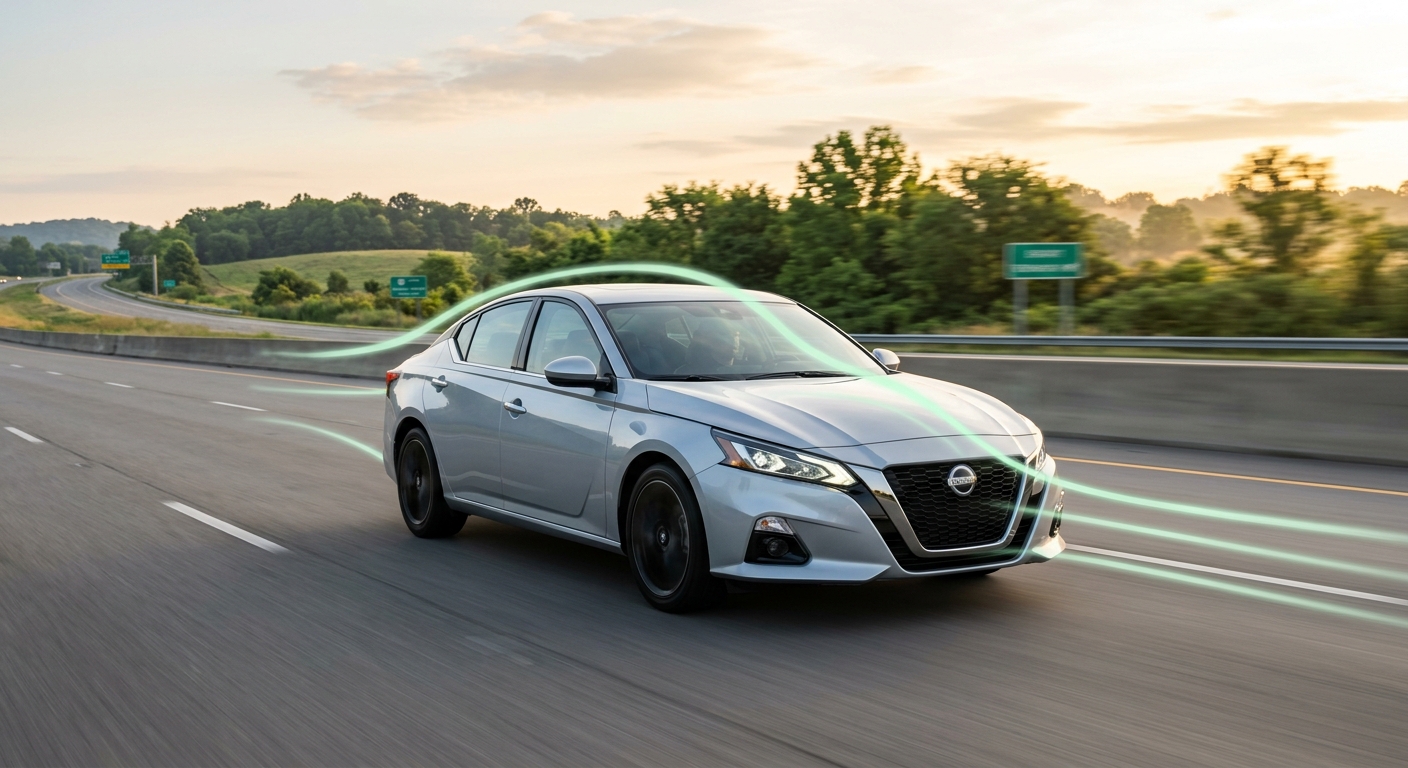
How we drive on a daily basis directly determines how often we visit the fuel pump. Rapid acceleration and harsh braking can reduce highway efficiency by 15% to 30%, and city efficiency by 10% to 40% [source: U.S. Department of Energy – Fuel Economy Information]. Maintaining a steady speed and anticipating traffic flow allows the engine to operate within its most efficient range. Driving at high speeds also creates significant aerodynamic drag, with fuel economy dropping rapidly at speeds above 50 mph [source: U.S. Department of Energy – Fuel Economy Information].
Extended idling is another common habit that drains fuel without moving the vehicle. A typical gasoline engine can consume up to about 0.5 gallons of fuel per hour while idling [source: U.S. Department of Energy – Fuel Economy Information]. Turning off the engine when parked for more than 10 seconds saves fuel and reduces unnecessary wear [source: U.S. Department of Energy – Fuel Economy Information]. While drivers in colder states face severe winter battery drain, our mild local climate means seasonal temperature swings have a muted impact on range, making electric driving highly practical year-round. During colder months, driving off gently after roughly 30 seconds allows the vehicle to reach its optimal operating temperature much faster than idling in a driveway [source: U.S. Department of Energy – Fuel Economy Information].
Carrying extra weight or mounting external cargo carriers also forces the engine to work harder. An additional 100 pounds in the cabin or trunk can decrease fuel economy by up to 1% [source: U.S. Department of Energy – Fuel Economy Information], while roof racks increase aerodynamic drag, cutting fuel efficiency by up to 8% in city driving and up to 25% on the highway [source: U.S. Department of Energy – Fuel Economy Information]. Combining multiple short errands into a single trip ensures the engine stays warm, which is twice as efficient as taking several cold-start trips [source: U.S. Department of Energy – Fuel Economy Information]. For those looking to eliminate fuel costs entirely, we offer options like the highly efficient electric hatchback [source: Clean Fleet Report – Fuel‑Efficient Nissan Models for 2026]. Drivers seeking a fuel-efficient sedan can also explore our inventory of efficient compact cars [source: Car and Driver – 2026 Nissan Sentra Review, Pricing, and Specs], while those needing more space can look at our selection of midsize sedans. Anyone ready to upgrade can browse our new car options to find a model that fits their commuting style.
Table of Contents
- Understanding What Causes Poor Gas Mileage in Modern Vehicles
- The Mechanical Engine Components That Impact Your Fuel Efficiency
- How Tire Pressure, Alignment, and Road Friction Control Your MPG
- Practical Driving Habits to Instantly Boost Your Fuel Economy
- Choosing the Right Fuel-Efficient Nissan Model for Your Daily Drive
- Common Questions About Maintaining Peak Vehicle Efficiency
- Keep Your Vehicle Running Efficiently with Newton Nissan
Understanding What Causes Poor Gas Mileage in Modern Vehicles
When a vehicle suddenly begins consuming more fuel than usual, several underlying factors are typically at play. Our service advisors frequently hear from commuters who notice their weekly fuel costs rising and want to know what causes poor gas mileage in a car before they schedule a diagnostic check. While driving habits play a major role, mechanical degradation and neglected maintenance are often the main culprits behind a sudden drop in efficiency. Modern engines rely on a precise balance of air, fuel, and spark to operate efficiently, and any disruption to this system can cause fuel consumption to spike.
A malfunctioning engine management system or a failing sensor can severely impact fuel economy. For example, a bad oxygen sensor can cause a drop in fuel mileage of up to 40% because the engine computer cannot accurately measure the air-fuel ratio, often resulting in the engine running “rich” by burning excess fuel [source: U.S. Department of Energy – Fuel Economy Information]. Similarly, a stuck-open thermostat prevents the engine from reaching its proper operating temperature, causing the computer to continuously inject extra fuel to warm up the combustion chambers.
Neglected routine services also contribute to poor fuel economy over time. Dragging brake calipers, worn wheel bearings, and old transmission fluid all introduce mechanical resistance that the powertrain must work harder to overcome [source: U.S. Department of Energy – Fuel Economy Information]. If you want to trade in your current car for something more efficient, you can quickly value your trade-in online or use our trade valuation tool to see what your vehicle is worth. For drivers looking to swap their current ride for a more efficient option, we offer a variety of high-quality pre-owned vehicles. Budget-conscious buyers can explore our selection of affordable pre-owned models or look through our inventory of vehicles priced under $30K. We invite you to browse our entire pre-owned inventory to find an efficient vehicle that matches your driving needs.
Fuel Economy
Fuel economy and range by trim
| Feature | S | SL | SR | SV |
|---|---|---|---|---|
| MPG | 30 city / 38 hwy / 33 combined | 29 city / 36 hwy / 32 combined | 29 city / 36 hwy / 32 combined | 30 city / 38 hwy / 33 combined |
The Mechanical Engine Components That Impact Your Fuel Efficiency
The combustion process relies on several critical engine components to maintain peak fuel efficiency. Spark plugs are responsible for igniting the air-fuel mixture, and when they become worn or fouled, they cause incomplete combustion and engine misfires [source: U.S. Department of Energy – Fuel Economy Information]. This wasted fuel exits through the exhaust system without generating power, causing a noticeable drop in gas mileage [source: U.S. Department of Energy – Fuel Economy Information]. Replacing spark plugs at recommended intervals—typically between 30,000 and 100,000 miles depending on the vehicle—is essential to keep the engine running smoothly.
Air filtration is another vital factor in maintaining the correct air-fuel ratio. A heavily clogged air filter restricts the volume of fresh air entering the combustion chambers. While modern fuel-injected engines use sensors to scale back fuel delivery when air is restricted—primarily reducing acceleration rather than drastically cutting mileage—a clean filter remains crucial for optimal power delivery and engine health. Furthermore, using the incorrect grade of motor oil can increase internal engine friction, lowering fuel economy by 1% to 2% [source: U.S. Department of Energy – Fuel Economy Information]. In addition to engine components, electrical systems must function properly, and you can explore our battery services to ensure your electrical connections are secure.
The compact sedan class demonstrates how these mechanical systems work together to deliver exceptional fuel economy. The S and SV trims of our compact sedan achieve an EPA-rated 30 city / 38 hwy / 33 combined mpg, while the sportier SL and SR trims are rated at 29 city / 36 hwy / 32 combined mpg. Keeping these models running at peak efficiency requires genuine replacement components. Drivers can easily order genuine parts online or visit our parts department for expert assistance. For those interested in a dependable pre-owned option, we also encourage you to browse our used car selection.
Engine & Performance
Powertrain specs by trim
| Feature | S | SL | SR | SV |
|---|---|---|---|---|
| Engine | 2.0L | 2.0L | 2.0L | 2.0L |
| Horsepower | 149 hp | 149 hp | 149 hp | 149 hp |
| Torque | 146 lb-ft | 146 lb-ft | 146 lb-ft | 146 lb-ft |
| Transmission | CVT | CVT | CVT | CVT |
| Drivetrain | Front-wheel drive | Front-wheel drive | Front-wheel drive | Front-wheel drive |
How Tire Pressure, Alignment, and Road Friction Control Your MPG
Physical contact with the road is a major source of energy loss, making tires and alignment critical to fuel economy. Underinflated tires have a larger contact patch with the pavement, which increases rolling resistance and forces the engine to burn more fuel to maintain speed [source: U.S. Department of Energy – Fuel Economy Information]. Every 1 psi drop in average tire pressure can lower gas mileage by about 0.2 percent [source: U.S. Department of Energy – Fuel Economy Information]. Keeping tires inflated to the recommended pressure listed on the driver-side door jamb can improve overall fuel economy by up to 3 percent [source: U.S. Department of Energy – Fuel Economy Information].
Improper wheel alignment also forces the engine to work harder by dragging the tires sideways rather than letting them roll freely [source: U.S. Department of Energy – Fuel Economy Information]. This misalignment creates constant mechanical drag, which rapidly consumes fuel and causes uneven tread wear [source: U.S. Department of Energy – Fuel Economy Information]. Commuters traveling the rolling country lanes and agricultural routes around Cross Plains will find that maintaining correct alignment is especially important for preserving tire life and maximizing fuel efficiency on rural roads.
The standard setup of our compact sedan showcases how optimized mechanical design minimizes road friction. Equipped with a 2.0L four-cylinder engine producing 149 hp and 146 lb-ft of torque, this sedan uses a smooth CVT and a Front-wheel drive configuration to deliver power efficiently. For buyers looking to maximize their savings, we offer highly affordable options, including our selection of used vehicles under $10K and our inventory of pre-owned vehicles under $20K. Commuters can also browse our pre-owned midsize sedan inventory to find a comfortable, fuel-efficient ride.
Practical Driving Habits to Instantly Boost Your Fuel Economy
Modifying daily driving habits is the fastest way to improve a vehicle’s fuel economy without spending money on repairs. Accelerating smoothly and anticipating traffic patterns allows the vehicle to carry its momentum, reducing the need for heavy braking and subsequent hard acceleration [source: U.S. Department of Energy – Fuel Economy Information]. Avoiding aggressive driving behaviors can improve fuel economy by up to 33 percent on the highway and roughly 5 percent during city driving [source: U.S. Department of Energy – Fuel Economy Information].
Using cruise control on flat highway stretches helps maintain a constant speed, which prevents the subtle, fuel-wasting speed fluctuations common with manual throttle input. Drivers should also be mindful of aerodynamic drag at higher speeds. Removing unused roof racks, cargo boxes, or bicycle carriers when they are not in use minimizes wind resistance, significantly boosting efficiency at highway speeds [source: U.S. Department of Energy – Fuel Economy Information].
For peace of mind on every journey, Nissan owners benefit from comprehensive support during unexpected mechanical issues or flat tires. If you ever experience an efficiency-robbing breakdown or a flat tire on the road, you can contact Nissan Roadside Assistance: 1-800-225-2476 for manufacturer-backed emergency support, ensuring your vehicle is towed directly to an authorized service center. If you are looking to upgrade to a spacious yet efficient crossover, you can browse our pre-owned midsize crossover inventory or explore our selection of pre-owned compact crossovers [source: Clean Fleet Report – Fuel‑Efficient Nissan Models for 2026]. We also invite you to browse our complete used Nissan inventory to find the perfect match for your lifestyle.
Choosing the Right Fuel-Efficient Nissan Model for Your Daily Drive
Finding the right vehicle involves balancing interior space, capability, and fuel economy. For daily commuters, a compact sedan offers a highly practical solution. The entry-level S trim starts at a base MSRP of $22,600, while the well-equipped SV is listed at $23,370, the sporty SR at $25,000, and the premium SL at $27,990, with all trims subject to a $1,245 destination charge. These models provide an exceptional balance of modern technology and commuter-friendly efficiency.
The daily commute from Portland to regional employment centers is a perfect example of where a highly efficient sedan or crossover pays dividends. Commuters negotiating this route can significantly lower their monthly fuel expenses by choosing a vehicle designed to maximize every gallon. For those who need more cargo space than a traditional sedan offers, a compact crossover provides excellent utility while maintaining impressive highway mileage [source: Clean Fleet Report – Fuel‑Efficient Nissan Models for 2026].
When you are ready to make a purchase, our finance department is here to assist with your online credit application. We work with a variety of financial situations and offer specialized financing options to help you get behind the wheel. You can also easily apply for vehicle financing from the comfort of your home. Local drivers can connect with our nearby showroom location or stop by our localized dealership services to explore our inventory. We also serve the surrounding countryside, and you can easily access our surrounding area sales team or visit our regional dealership services. For those interested in pre-owned options, we maintain a robust inventory of used Nissan models and offer specialized pre-owned vehicle sales in the area. If you want to explore our complete lineup of new models, you can browse our new Nissan inventory online.
Pricing
Pricing by trim
| Feature | S | SL | SR | SV |
|---|---|---|---|---|
| Base MSRP | $22,600 | $27,990 | $25,000 | $23,370 |
| Destination charge | $1,245 | $1,245 | $1,245 | $1,245 |
Common Questions About Maintaining Peak Vehicle Efficiency
Maintaining peak vehicle efficiency involves staying informed about regular service schedules and understanding how different vehicle systems interact. Our team is dedicated to providing clear, helpful information to help you get the most out of every gallon. To see how we support our customers and community, you can learn more about our team or discover our local community involvement initiatives. We also offer convenient online tools to streamline your experience, including the ability to explore our digital purchasing process. For those interested in our specialized service benefits, you can learn about our service hours or explore our certified pre-owned benefits.
Q: How does a failing fuel injector affect vehicle fuel consumption?
A: A faulty fuel injector can either leak excess fuel into the combustion chamber or fail to spray a fine mist, preventing complete combustion. This mechanical malfunction leads to unburned fuel escaping through the exhaust, which significantly reduces gas mileage and can trigger a check engine light.
Q: Can a low transmission fluid level cause low gas mileage?
A: Yes, low or degraded transmission fluid increases internal friction and slippage within the gearbox. This forces the engine to run at higher RPMs to maintain speed, which directly increases fuel consumption over time [source: U.S. Department of Energy – Fuel Economy Information].
Q: Does using premium fuel improve gas mileage in a standard engine?
A: Using premium gasoline in an engine designed for regular unleaded does not increase fuel efficiency or performance. Modern engine computers are calibrated for the recommended fuel grade, so paying extra for higher octane is unnecessary unless specified in the owner’s manual.
Q: How long does a multi-point inspection take when checking for efficiency issues?
A: A comprehensive multi-point inspection typically takes about 45 minutes to an hour. During this check, our technicians inspect tire wear, alignment, air filters, and spark plugs to identify any issues affecting your fuel economy.
Q: What is the benefit of choosing a certified pre-owned vehicle for efficiency?
A: A certified pre-owned vehicle undergoes a rigorous inspection process to ensure all mechanical systems, including the engine and drivetrain, meet strict manufacturer standards. This guarantees that the vehicle operates at its peak designed fuel efficiency from the moment you drive it off the lot.
Keep Your Vehicle Running Efficiently with Newton Nissan
Ensuring your vehicle maintains its peak fuel economy requires a combination of smart driving habits and regular professional maintenance. From tire rotations and wheel alignments to spark plug replacements and sensor diagnostics, our certified service team is here to help you maximize every drop of fuel. If you are experiencing a sudden drop in gas mileage or want to have your vehicle inspected before a long trip, we invite you to visit our state-of-the-art service department.
For drivers who need a larger vehicle but still want to maintain solid fuel efficiency, we can help you explore options like our selection of pre-owned full-size SUVs. Ready to experience the difference of a dealership dedicated to your vehicle’s longevity and performance? You can get directions to our Gallatin showroom at 1461 Nashville Pike, Gallatin, TN 37066, or give our team a quick call to schedule your next maintenance appointment.
0 comment(s) so far on How Daily Commuting Habits Shape Nissan Fuel Economy