

The Critical Work Engine Oil Performs Inside Your Vehicle
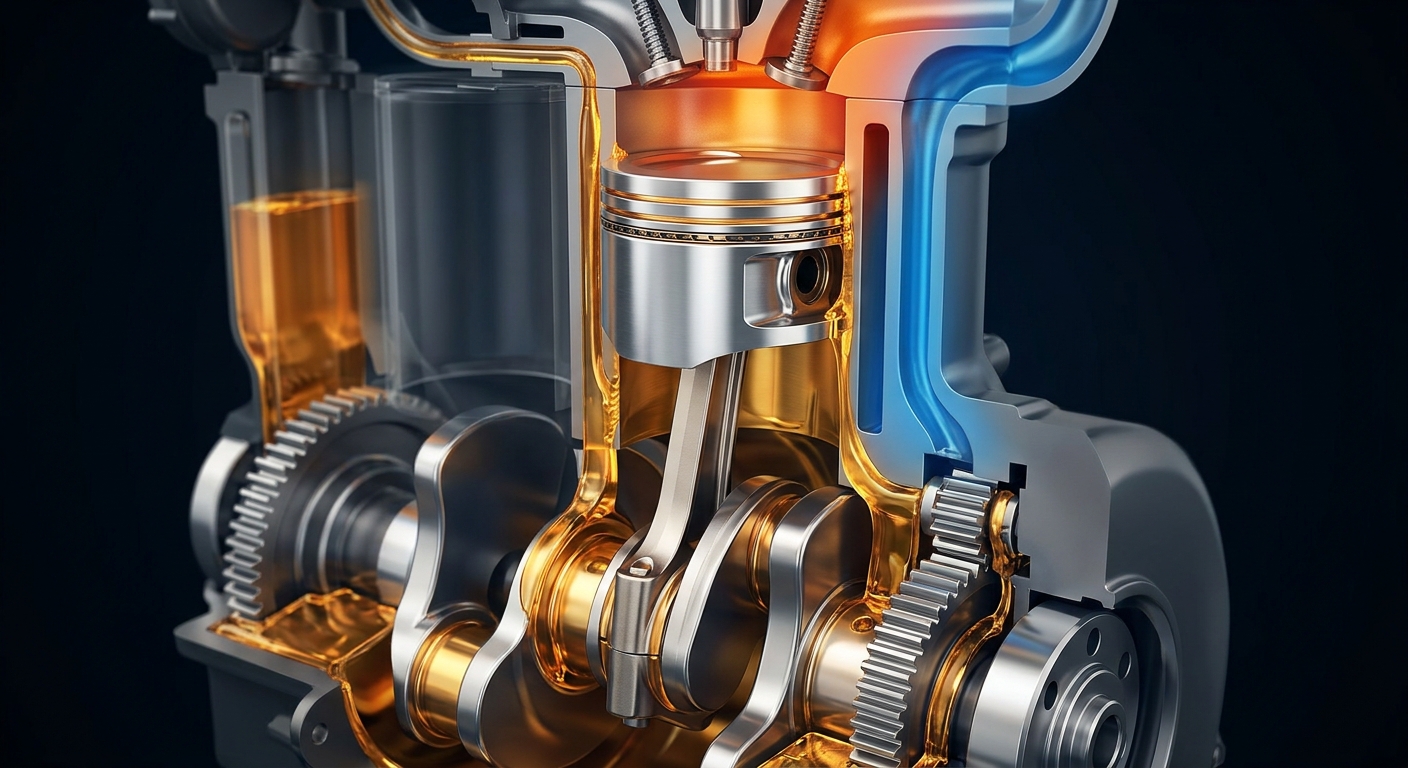
Internal combustion engines rely on a constant, pressurized flow of motor oil to prevent catastrophic metal-on-metal contact. Within the engine block, pistons travel rapidly inside cylinders, and camshafts actuate valves with micro-second precision. Motor oil serves as a physical barrier, creating a microscopic film that prevents these rapidly moving steel and aluminum components from grinding against one another. Without this lubrication, the intense friction would generate immediate, destructive heat, leading to warped valves, scored cylinder walls, and eventually a completely seized engine block.
Beyond simple lubrication, motor oil is responsible for managing as much as 40% of an engine’s total cooling needs. While the radiator and coolant loop manage the upper cylinder head and outer block, coolant cannot directly reach deep internal components like the crankshaft, main bearings, and connecting rods. As oil circulates through these high-stress areas, it absorbs thermal energy and carries it down to the oil pan, where the heat is dissipated. This continuous thermal transfer prevents localized hot spots that can weaken metal components over time.
Motor oil also acts as an active cleaning agent inside the crankcase. As fuel burns, combustion byproducts like soot, carbon deposits, and moisture inevitably blow past the piston rings. Modern lubricants contain specialized detergents and dispersants designed to suspend these microscopic particles, preventing them from coalescing into harmful deposits on delicate engine parts. These suspended contaminants are carried directly to the oil filter, where they are trapped and held out of circulation.
On the farms around Cross Plains, where utility vehicles and trucks regularly haul heavy machinery across unpaved fields, engines operate under high-stress conditions that make this chemical protection essential. If you are ready to explore our lineup of heavy-duty vehicles, you can browse our new Nissan inventory to find capable models. For those who require rugged utility for agricultural work, we recommend looking at new Nissan Frontier trucks which are engineered to handle demanding payloads. Alternatively, drivers seeking a balanced daily commuter can explore new Nissan Rogue crossovers for excellent efficiency and modern safety features.
Table of Contents
- Understanding Viscosity Grades and Modern API SP Lubricant Standards
- The Costly Consequences and Symptoms of Neglecting an Oil Change
- How Driving Conditions Impact Your Nissan Service Intervals
- Choosing the Right Formula: Full Synthetic vs. Conventional and Blends
- Why Professional Filter Replacement and Multi-Point Diagnostics Matter
- Common Questions About Nissan Engine Maintenance and Oil Care
- Schedule Your Next Nissan Maintenance Service
Understanding Viscosity Grades and Modern API SP Lubricant Standards
Engine oil is classified by its viscosity, which measures its resistance to flow at specific temperatures. The Society of Automotive Engineers establishes these viscosity classifications under the SAE J300 standard, which you will see printed on every oil bottle as a multi-grade rating, such as SAE 0W-20 or SAE 5W-30. The first number, followed by the letter “W” for winter, represents the oil’s cold-weather flow characteristics. A lower winter rating means the oil remains fluid at freezing temperatures, allowing the oil pump to quickly distribute lubricant to the top of the engine during a cold start, which is when the majority of engine wear occurs.
The second number in the rating indicates the oil’s viscosity at the engine’s normal operating temperature, measured at 212 degrees Fahrenheit. A higher second number indicates a thicker oil film that provides robust protection under high-temperature, high-load conditions. However, thicker oil also increases internal drag, which can slightly reduce fuel economy. Modern passenger vehicles are engineered with incredibly tight internal tolerances, often requiring thinner lubricants like SAE 0W-20 to optimize efficiency while maintaining a protective barrier.
In addition to viscosity, the American Petroleum Institute establishes performance categories to ensure oils meet the demands of modern engine designs. The current standard for gasoline engines is the API SP designation. This standard was specifically engineered to address the unique challenges of modern direct-injection and turbocharged powerplants. The API SP specification provides enhanced protection against low-speed pre-ignition, a potentially destructive pre-ignition phenomenon that can crack pistons in turbocharged engines, while also offering superior timing-chain wear protection and oxidation control.
When maintaining a pre-owned vehicle, using the correct specification of oil is just as critical as it is for a brand-new model. Drivers looking for reliable transport can browse our affordable cars to find highly efficient vehicles that have been thoroughly inspected. Keeping these vehicles serviced with the proper viscosity grade ensures their long-term durability. If you are interested in a dependable pre-owned option, you can check our selection of used Nissan vehicles to find a model that fits your driving habits and maintenance preferences.
The Costly Consequences and Symptoms of Neglecting an Oil Change
When motor oil is left in an engine past its recommended service life, the chemical additives deplete and the base oil oxidizes. This thermal breakdown fundamentally changes the physical properties of the lubricant, transforming a free-flowing fluid into a thick, tar-like substance known as engine sludge. As sludge accumulates, it restricts flow through the narrow oil passages, or galleries, that feed critical valvetrain components. This restriction starves the upper engine of lubrication, causing immediate metal-on-metal friction and rapid wear.
Our service technicians frequently observe the early warning signs of this degradation when performing routine vehicle inspections. Drivers neglecting their maintenance intervals will often notice specific, progressive symptoms:
- Unusual Engine Noises: A metallic tapping or knocking sound, particularly during startup, indicates that degraded oil is failing to reach the hydraulic lifters and valvetrain quickly enough.
- Scorched Odor: A distinct burning smell inside the cabin suggests that old, thin oil is slipping past worn seals and burning off on hot exhaust components, or that the engine is running dangerously hot due to friction.
- Instrument Cluster Warnings: The illumination of the check engine or oil pressure warning light indicates a critical drop in system pressure or a detected engine misfire.
- Sluggish Acceleration: Increased internal resistance forces the pistons to work harder, resulting in a noticeable loss of throttle response and a drop in overall fuel efficiency.
Ignoring these warning signs can result in catastrophic mechanical failure. When critical bearings are starved of oil, they can overheat and weld themselves to the crankshaft, throwing a connecting rod directly through the engine block. Furthermore, modern variable valve timing systems rely on precise oil pressure to actuate; dirty oil can clog these delicate solenoids, leading to poor engine timing, rough idling, and misfires. Neglecting these services can also void your vehicle’s factory powertrain warranty, leaving you responsible for the entire cost of an engine replacement.
To protect yourself from these avoidable expenses, keeping up with routine maintenance is paramount. If you are currently shopping for a reliable pre-owned vehicle, you can browse our used cars to find models that have documented service histories. For buyers working with a specific budget, we offer a wide variety of used vehicles priced under $30,000 that deliver exceptional value and peace of mind. Consistently changing the oil on these vehicles will preserve their performance and safeguard your investment for miles to come. You can view our pre-owned inventory online to see what models are currently available.
How Driving Conditions Impact Your Nissan Service Intervals
Nissan engineers establish standard maintenance schedules based on extensive testing under controlled laboratory and road conditions. For many modern Nissan models, the factory-recommended interval is an oil and filter change every 5,000 miles or 6 months, whichever comes first. This interval is designed to keep the engine operating at peak efficiency under normal driving conditions, which consist of mixed highway and city driving in moderate climates with minimal towing or heavy cargo loads.
However, many drivers do not realize that their daily routines actually fall under the manufacturer’s definition of “severe service” conditions. Severe driving conditions require more frequent oil changes—typically every 3,000 miles or 3 months—to counteract the accelerated degradation of the lubricant. These conditions include:
- Repeated short trips of less than 5 miles, which prevent the engine from reaching full operating temperature and allow moisture to condense in the crankcase.
- Extended periods of idling, such as stop-and-go rush hour traffic or delivery driving.
- Towing a trailer, hauling heavy cargo, or driving in mountainous terrain.
- Operating in extremely dusty, sandy, or muddy environments.
- Driving in sustained extreme hot or freezing cold weather.
For daily commuters driving from Portland to regional commercial centers, the frequent stop-and-go highway traffic during peak hours qualifies as severe service, accelerating the rate at which oil collects moisture and fuel dilution. Drivers can consult with our team at our specialized Portland area assistance page to determine if their daily route meets these severe-service criteria. Adjusting your service schedule to match your actual driving environment is the best way to prevent premature engine wear and maintain optimal performance.
Choosing the Right Formula: Full Synthetic vs. Conventional and Blends
The primary difference between motor oil formulas lies in their chemical refinement and molecular uniformity. Conventional motor oil is refined directly from crude oil, containing molecules of varying shapes and sizes along with trace impurities like sulfur and wax. While conventional oil provides adequate lubrication for older, low-stress engines, it is highly susceptible to thermal breakdown. Under extreme heat, the lighter molecules in conventional oil evaporate, causing the remaining fluid to thicken rapidly and form sludge.
Full synthetic motor oil is chemically engineered from pure base compounds, resulting in highly uniform molecules that slide past one another with minimal friction. This molecular consistency gives synthetic oil superior shear stability, meaning it retains its protective viscosity under extreme mechanical stress. Additionally, synthetic lubricants flow much more easily at low temperatures and resist oxidation at high temperatures, making them essential for modern turbocharged engines like Nissan’s 1.5L VC-Turbo engine, which operates under immense pressure and heat.
Synthetic blends offer a middle ground, combining conventional and synthetic base oils to provide better oxidation resistance than conventional oil at a lower price point than full synthetic. High-mileage oil is formulated specifically for engines with over 75,000 miles on the odometer. These oils contain specialized seal conditioners that swell hardened rubber seals, helping to prevent external oil leaks and reduce internal oil consumption in older powerplants.
Choosing the correct formula depends entirely on your vehicle’s engineering specifications. If you are operating an older vehicle, you can browse our vehicles priced under $20,000 to find highly reliable transportation that may benefit from high-mileage or synthetic blend formulas. For those driving more modern sedans, checking our used Nissan Altima inventory will show you vehicles designed to run exclusively on low-viscosity full synthetic oils to maximize their fuel economy and protect their advanced valvetrains.
Why Professional Filter Replacement and Multi-Point Diagnostics Matter
An oil change is only half complete without a fresh, high-quality oil filter to capture circulating debris. As oil flows through the engine, it continuously deposits trapped carbon, dirt, and microscopic metal shavings into the filter medium. If the filter is not replaced regularly, it will eventually become fully saturated. To prevent total oil starvation, all modern oil filters are engineered with a mechanical bypass valve that opens when the filter clogs, allowing unfiltered oil to flow back into the engine. While this prevents immediate starvation, it means dirty, abrasive oil is continuously recirculated through your engine’s most sensitive components.
Opting for professional service ensures that your vehicle is fitted with a genuine OEM filter designed specifically for your engine’s flow rate and pressure requirements. Genuine Nissan filters feature a high-quality silicone anti-drainback valve that prevents oil from draining out of the engine’s upper channels when the ignition is turned off. This ensures that when you start your vehicle, oil pressure is delivered to the cylinder head instantly, eliminating the dry starts that cause severe valvetrain wear over time.
When you bring your vehicle to our factory-authorized service center, a standard oil change also includes a comprehensive multi-point inspection. Our technicians check critical fluid levels, inspect the health of your battery, measure tire tread depth, and examine brake pad thickness. This diagnostic process allows us to identify minor wear items before they develop into expensive, unexpected roadside breakdowns.
To maintain your vehicle with the highest quality components, you can order parts online directly from our dealership to secure genuine OEM filters and fluids. If you prefer to speak with a parts specialist, you can visit our parts department to find the exact specifications for your model year. When you choose our factory-trained team, you can discover why to buy from us and experience the peace of mind that comes with certified automotive care.
Common Questions About Nissan Engine Maintenance and Oil Care
Navigating the maintenance requirements of a modern vehicle can raise several questions about optimal service intervals and lubricant choices. Our service department is committed to helping you understand how to best care for your vehicle. If you are looking to streamline your next visit, you can learn about Newton Fastpass to see how we simplify the vehicle servicing and purchasing processes. To find out more about our philosophy and commitment to guest satisfaction, you can learn more about us or search online to find a car dealer near me who prioritizes factory-certified care.
Q: Can I switch from synthetic oil back to conventional oil?
A: Yes, modern engine oils are fully compatible, meaning you can switch between synthetic and conventional without damaging internal components. However, you must always meet or exceed the minimum viscosity and performance standards specified in your owner’s manual. If your vehicle specifies full synthetic oil from the factory, switching to conventional oil can lead to accelerated wear and potentially void your manufacturer warranty.
Q: What is the specific role of the oil filter in this process?
A: The oil filter captures carbon deposits, metal shavings, and road dust before they can recirculate and score polished engine surfaces. Replacing it with every oil change ensures the filter medium does not clog and force the bypass valve open. A clean filter maintains proper oil pressure throughout the entire lubrication system.
Q: How does engine oil prevent internal engine corrosion?
A: Modern motor oils contain chemical additives that neutralize corrosive acids created during the combustion process. This creates a microscopic protective barrier over steel and aluminum parts, preventing rust from forming during periods of inactivity. This chemical protection is especially important for vehicles that sit idle for extended periods.
Q: What does the oil pressure warning light actually indicate?
A: This dashboard warning light indicates that the oil pressure has dropped below the safe operating threshold, which can starve the engine of lubrication within seconds. If this light illuminates, you should safely pull over and shut off the engine immediately to prevent catastrophic failure. It does not simply mean the oil level is low; it indicates a critical lack of pressure.
Q: How long does a standard oil change service take?
A: A professional oil change at our service center typically takes between 30 to 45 minutes to complete. This time includes draining the old fluid, replacing the filter, replenishing with fresh oil, and performing a multi-point vehicle inspection. This efficient process allows you to get back on the road quickly with minimal disruption to your day.
Schedule Your Next Nissan Maintenance Service
Maintaining a regular oil change schedule is the most effective way to protect your automotive investment and ensure long-term reliability. Our factory-trained technicians utilize state-of-the-art diagnostic equipment and genuine OEM parts to keep your vehicle running exactly as the manufacturer intended. Whether you are driving a brand-new model or a dependable pre-owned vehicle, we are here to handle all of your routine maintenance needs.
If you are currently driving a premium family vehicle, you can browse our pre-owned Nissan Murano crossovers to find highly capable, comfortable options for your daily commute. For those planning to upgrade their current ride, we invite you to value your trade-in online to see how much equity you can apply toward your next purchase.
When you are ready to visit, you can easily get directions to Newton Nissan of Gallatin located at 1461 Nashville Pike, Gallatin, TN 37066. To schedule an appointment or speak directly with a service advisor, please give our team a call at (615) 442-3090. We look forward to helping you keep your vehicle in peak operating condition.
0 comment(s) so far on The Critical Work Engine Oil Performs Inside Your Vehicle