

The Danger of Driving with a Leaking Brake Line: What You Need to Know
Why You Cannot Safely Drive with a Leaking Brake Line
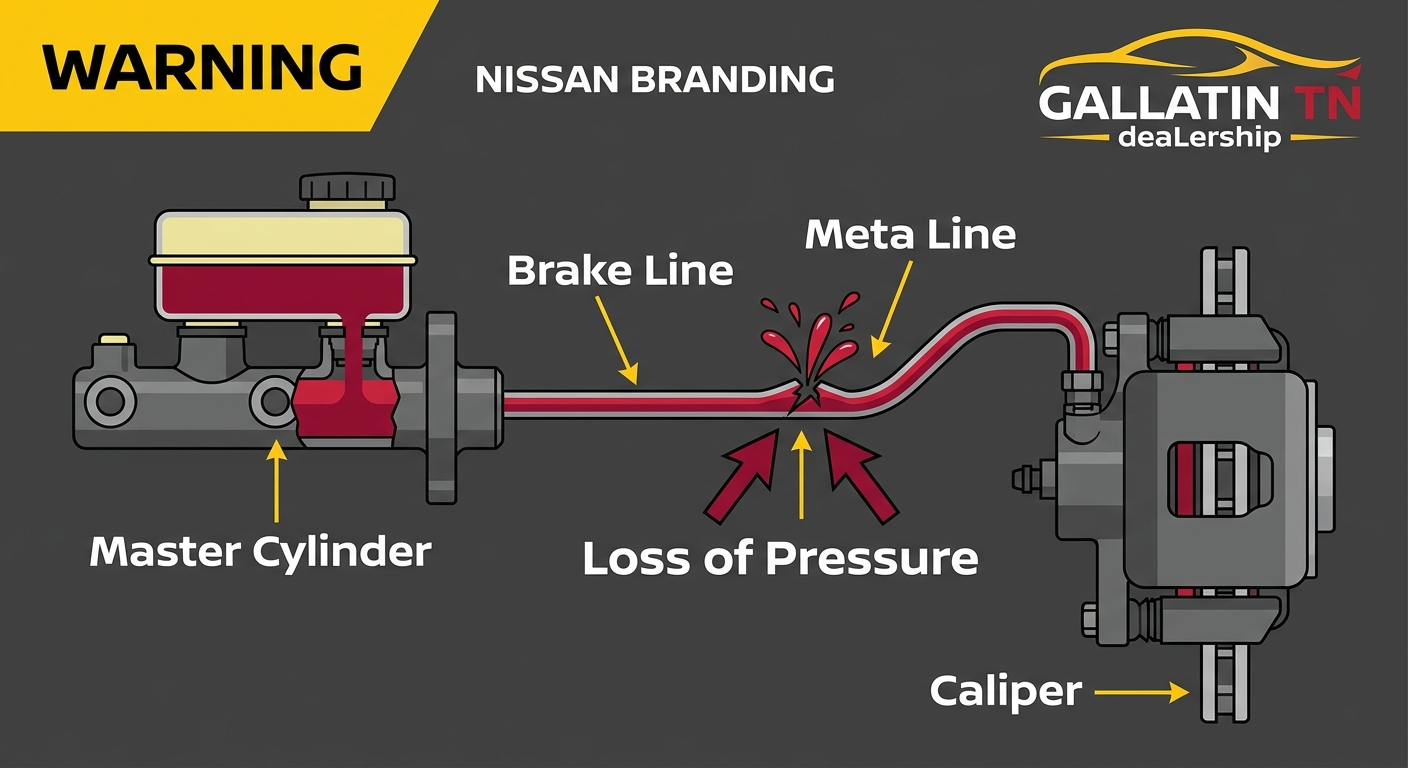
If you discover a leak in your hydraulic system, the immediate question is whether you can limp the vehicle home or to a service bay. Driving with a leaking brake line is extremely dangerous and should never be attempted, regardless of how small the leak appears. Your vehicle relies on a sealed hydraulic system to multiply the force of your foot on the pedal into enough stopping power to halt thousands of pounds of metal. When a line develops a leak, fluid escapes, air enters the system, and the hydraulic pressure drops rapidly, which can lead to sudden and complete brake failure.
Automotive braking systems are designed to operate under immense pressure, typically ranging from 1,000 to 2,000 PSI during normal braking maneuvers. When you press the brake pedal, the master cylinder forces brake fluid through the metal lines and flexible hoses to the calipers, which clamp the pads against the spinning rotors. A breach anywhere in this network prevents the system from maintaining this critical pressure. Instead of squeezing the brake pads, the fluid simply takes the path of least resistance and sprays out of the leak, leaving you with little to no stopping power when you need it most.
Even a tiny pinhole leak will quickly empty the master cylinder reservoir as you pump the pedal. While modern vehicles use a dual-chamber master cylinder designed to preserve braking on at least two wheels if one circuit fails, this is strictly an emergency backup to help you stop once, not a license to continue driving. If you suspect a leak while traveling near the farmland and quiet country roads of Cross Plains, the safest course of action is to pull over immediately in a secure location and coordinate professional transport. You can contact our service team at (615) 442-3090 to discuss your transport options, or learn more about our commitment to driver safety by reading about our dealer philosophy. If you need to have your vehicle towed directly to our service department, you can easily find our service center location to share the coordinates with your towing provider.
Table of Contents
- How to Identify a Leaking Brake Line Before Total Failure
- Understanding Brake Line Specifications and Materials
- Driving Challenges and Your Hydraulic Brake System
- Professional Diagnostics Versus Temporary DIY Brake Repairs
- Maintaining Your Vehicle Safety
How to Identify a Leaking Brake Line Before Total Failure
Recognizing the early warning signs of a failing brake line can prevent a high-stress emergency on the road. One of the most common indicators is a change in the physical feel of your brake pedal. If the pedal feels unusually soft, spongy, or sinks all the way to the floorboard with minimal resistance, air has likely bypassed the leaked fluid and entered the hydraulic lines. Additionally, you should keep an eye on your instrument cluster, as a dashboard brake warning light will often illuminate when the fluid level in the master cylinder reservoir drops below a safe threshold.
Another clear sign is the presence of fluid puddles underneath your vehicle after it has been parked. Fresh brake fluid is typically clear to light yellow with a slick, oily consistency, while older, worn-out fluid turns dark brown or black. If you notice these oily spots on your driveway, look behind the wheels and along the inner frame rails for wetness. For drivers operating larger vehicles like a pre-owned Nissan Armada, which require consistent hydraulic pressure to manage their substantial curb weight, keeping these lines intact is especially critical.
If your current vehicle is showing signs of severe rust or brake system deterioration, it might be time to consider upgrading to a more reliable ride. We invite you to browse our pre-owned Nissan models to find a vehicle with a clean bill of health. We also maintain a diverse inventory of reliable transportation for those shopping on a budget, allowing you to browse our affordable used vehicles. For those who require maximum towing capability and robust build quality, you can also view our pre-owned Nissan Armada inventory to find a strong, dependable SUV.
Understanding Brake Line Specifications and Materials
Automotive brake lines must withstand extreme environmental hazards and high internal pressures over years of service. Standard passenger cars and SUVs typically utilize rigid, double-walled steel tubing with a 3/16-inch outer diameter for individual wheel runs, while larger trucks often employ 1/4-inch lines for the primary feed from the master cylinder to the rear axle. These metal tubes are engineered with specialized coatings, such as zinc or polyvinyl fluoride, to protect against moisture and road debris.
Over time, moisture absorbed by the glycol-ether-based brake fluid can corrode the steel lines from the inside out, while road salt and humidity attack the exterior. In the rolling hills and humid climate around Westmoreland, metal lines are subjected to moisture and seasonal road treatments that accelerate rust. While rigid metal lines run along the chassis, flexible hoses made of reinforced rubber or braided stainless steel are used at the wheels to allow for suspension travel and steering angles. Rubber hoses can dry rot, crack, or swell internally over time, which restricts fluid flow and mimics the symptoms of a line blockage.
If you are driving an older vehicle with heavily corroded lines, the cost of a complete hydraulic overhaul can sometimes approach the overall value of the car. In these situations, transitioning into a newer, low-maintenance vehicle is often the most practical financial decision. You can explore our quality pre-owned vehicles to find a model that has undergone a rigorous multi-point safety inspection. We offer many dependable options to fit different budgets, so you can shop our used vehicles under $30K or browse our entire used inventory to find the right fit for your daily drive.
Driving Challenges and Your Hydraulic Brake System
Your braking system faces distinct physical challenges depending on where and how you drive. When navigating steep descents, stop-and-go highway traffic, or towing heavy loads, brake temperatures rise significantly. This thermal energy transfers to the brake fluid, and if a line is compromised or the fluid is old and contaminated with water, the fluid can actually boil. When brake fluid boils, it turns into gas bubbles, which compress easily under pressure and cause a sudden, terrifying loss of pedal response.
The physical terrain also plays a major role in the wear and tear of your undercarriage components. For instance, traveling regularly on the gravel roads and rolling hills around Portland exposes the underside of your vehicle to flying rocks and debris, which can chip the protective coatings on metal brake lines and lead to localized rust. Regular visual inspections are the best defense against these hidden hazards, ensuring that small rock chips do not turn into catastrophic ruptures during a hard stop.
If you are currently driving a vehicle that feels unsafe or requires frequent, expensive brake repairs, we can help you find a reliable replacement. We carry a wide selection of highly inspected, budget-friendly options, allowing you to shop our used cars under $10K. For commuters seeking excellent fuel economy and modern safety features, you can browse our pre-owned Nissan Altima inventory. We also offer a variety of mid-range options, so feel free to shop our pre-owned vehicles under $20K to find a dependable car that keeps you safe on every commute.
Professional Diagnostics Versus Temporary DIY Brake Repairs
While some experienced garage hobbyists attempt to patch brake lines using compression fittings or copper tubing, these temporary fixes are highly discouraged and often illegal. Standard copper tubing cannot withstand the 1,000 to 2,000 PSI operating pressures of a modern hydraulic brake system, and compression fittings are prone to sudden slippage under hard braking. A proper, permanent repair requires flaring double-walled steel or copper-nickel lines with specialized professional tools to create leak-free connections.
When our certified technicians inspect your braking system, we do not just look at the point of the leak. We perform a comprehensive diagnostic of the entire system, evaluating the thickness of your brake pads, the condition of the rotors, caliper piston operation, and the integrity of all flexible hoses. We also check the anti-lock braking system sensors and actuators to ensure your electronic safety nets are fully operational. If a line needs replacement, we use exact-fit components engineered specifically for your vehicle model to guarantee factory-level performance.
For those who prefer to perform authorized maintenance using original equipment manufacturer components, sourcing the correct parts is essential. You can order genuine parts online directly through our dealership to ensure you are getting the exact specifications required for your vehicle. If you want to consult with our parts specialists in person, you can visit our parts department to get expert advice on your project. If you are looking for a reliable family vehicle with a proven, robust braking system, we invite you to browse our pre-owned Nissan Murano inventory.
Maintaining Your Vehicle Safety
Keeping your vehicle’s braking system in peak operating condition is the single most important maintenance task for protecting yourself and your passengers. We recommend having your entire braking system inspected by a professional at least once a year or every 12,000 miles. During this inspection, our technicians will measure pad wear, check for rotor scoring, inspect all metal lines and rubber hoses for signs of aging, and test the moisture content of your brake fluid to determine if a system flush is needed.
If you are ready to transition into a brand-new vehicle equipped with the latest advanced driver-assist systems and fresh, factory-warranted mechanical components, we have an exceptional lineup waiting for you. You can browse our complete new Nissan inventory to find the perfect model for your lifestyle. We offer a wide range of body styles and powertrains, so you can shop our new Nissan cars, explore our new Nissan crossovers and SUVs, or view our new Nissan trucks.
For those interested in specific models, we have targeted inventories ready for you to explore:
- For efficient daily commuting, browse our new passenger cars or shop our new Nissan Versa inventory.
- For a refined compact sedan, shop our new Nissan Sentra inventory.
- For a midsize sedan with advanced tech, shop our new Nissan Altima inventory.
- For versatile and popular crossovers, shop our new Nissan Kicks inventory, check out the updated features when you shop our new Nissan Kicks Play inventory, or shop our new Nissan Rogue inventory.
- For premium comfort and style, shop our new Nissan Murano inventory.
- For adventure-ready family haulers, shop our new Nissan Pathfinder inventory or shop our new Nissan Armada inventory.
- For rugged capability on and off the road, shop our new Nissan Frontier inventory.
- For thrilling performance, shop our new Nissan Z inventory.
- For those looking to embrace electric driving, shop our new electric vehicles, check out our iconic hatchback when you shop our new Nissan Leaf inventory, or explore plug-in hybrid technology when you shop our new Nissan Rogue PHEV inventory.
No matter what your driving needs are, our team is here to help you find a safe, reliable vehicle. You can get directions to our showroom to speak with our sales and service experts in person. If you have any immediate questions about brake safety, vehicle maintenance, or our current inventory, please give our team a call at (615) 442-3090 and we will be happy to assist you.
0 comment(s) so far on The Danger of Driving with a Leaking Brake Line: What You Need to Know