

The Evolution of Gasoline Direct Injection and the Carbon Buildup Challenge
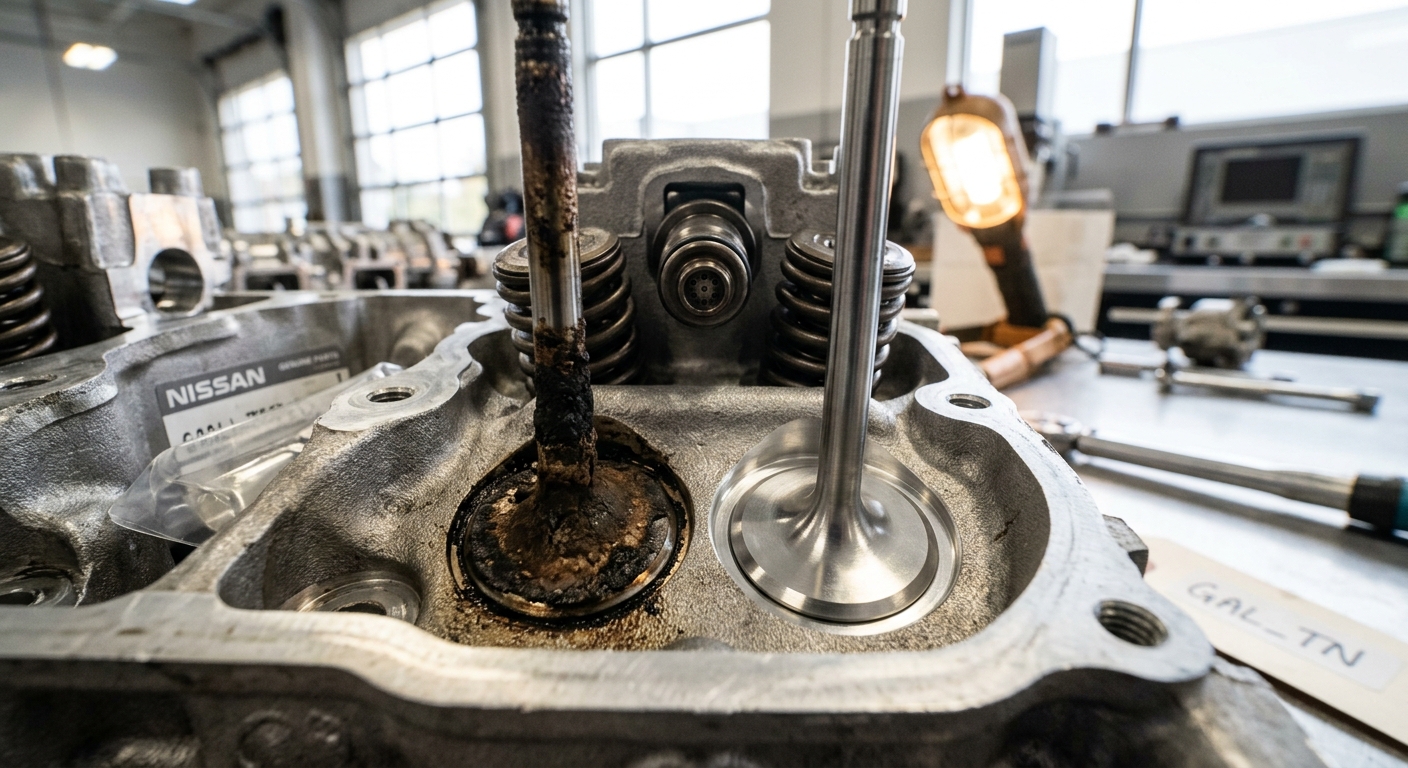
Modern engine technology has shifted significantly toward Gasoline Direct Injection to meet increasing demands for fuel efficiency and power. Unlike traditional port injection, where fuel is sprayed into the intake manifold and washes over the intake valves, GDI systems spray fuel directly into the combustion chamber. While this allows for precise control over the combustion process and improved MPG figures, it removes the natural cleaning cycle that kept intake valves free of debris. Without fuel acting as a solvent to rinse the valves, oil vapors and combustion byproducts bake onto the metal surfaces, creating hard carbon deposits that restrict airflow and eventually degrade performance.
The quiet, agricultural surroundings of Cross Plains provide a perfect example of how driving habits influence this buildup. Vehicles used for short trips around historic downtown areas often fail to reach the sustained operating temperatures necessary to minimize soot accumulation. When carbon builds up on the intake valves, the engine struggles to breathe, leading to a noticeable drop in throttle response and a rougher idle. This is not a failure of the engine design but rather a byproduct of how GDI technology operates in real-world conditions.
Addressing these deposits before they harden into a thick crust is the primary goal of professional maintenance. If you are noticing a loss of pep during your morning drive, you can call 615-442-3090 to speak with our service advisors about a diagnostic check. We focus on helping drivers maintain their vehicles at our Nashville showroom and service center. For those looking for a local Nissan dealer, our team provides the specialized equipment needed to reach the areas where standard fuel additives cannot go. You can even learn about our community efforts, such as how to win a car through our high school giveaway program, while you wait for your vehicle. For a precise location, our Gallatin address is easy to find on the map.
Table of Contents
- Understanding the BG GDI Fuel System Maintenance Process
- Proactive Chemical Cleaning Versus Invasive Walnut Blasting
- When Is Walnut Blasting Necessary for Direct Injection Engines
- The Financial and Performance Tradeoffs of Deferred Intake Maintenance
- How Middle Tennessee Commutes and Climate Impact Carbon Accumulation
- Common Questions About Direct Injection Carbon Removal
- Restoring Your Vehicle Performance at Newton Nissan of Gallatin
Understanding the BG GDI Fuel System Maintenance Process
The professional cleaning process developed by BG involves a three-pronged approach to restoring an engine to its factory specifications. First, a specialized tool atomizes a high-strength cleaner into the intake stream while the engine is running. This chemical mist coats the intake manifold and the “dry” side of the intake valves, softening and dissolving the baked-on carbon. Because this happens while the engine is at operating temperature, the liquefied carbon is safely processed through the combustion chamber and out the exhaust.
Following the intake cleaning, the service addresses the fuel injectors and the combustion chambers themselves. High-pressure GDI injectors have tiny orifices that can easily become clogged by microscopic deposits, disrupting the fine mist required for efficient burning. By using a professional-grade cleaner like BG 44K in the fuel tank, the service cleans the fuel lines and injectors from the inside out. This comprehensive treatment ensures that the air-to-fuel ratio remains optimal, preventing the “rich” running conditions that often accelerate further carbon accumulation.
Maintaining this system is especially important for owners who choose to browse budget-friendly vehicles that may have higher mileage. Even if you find a car under $20,000, a professional induction service can breathe new life into the engine and protect your investment. Many drivers who shop for vehicles under $30,000 prioritize long-term reliability, and staying ahead of carbon buildup is one of the most effective ways to avoid expensive mechanical repairs down the road.
Proactive Chemical Cleaning Versus Invasive Walnut Blasting
Choosing between a chemical service and walnut blasting usually comes down to the severity of the buildup and the current mileage of the vehicle. A proactive BG service typically costs between $225 and $250 and is designed to be performed as part of a routine 30,000-mile maintenance interval. This chemical method is non-invasive, requiring no engine teardown, and is highly effective at removing the “soft” or moderate carbon layers that accumulate during normal driving. It is a preventative measure that keeps the intake ports clear and the valves sealing properly.
Walnut blasting is a much more intensive mechanical process used when the carbon has hardened into a thick, rock-like substance. During this procedure, a technician must remove the intake manifold to gain direct access to the intake ports. A specialized machine then blasts crushed walnut shells at high pressure against the valves to chip away the stubborn deposits. Because of the labor involved in disassembling the engine, walnut blasting can easily exceed $800 to $1,000. While it is highly effective for neglected engines, it is a reactive solution for problems that could have been managed through regular chemical maintenance.
Drivers who browse our pre-owned inventory often ask about the service history of vehicles like the Nissan Altima. If you are looking at a used Nissan Altima or a pre-owned Nissan Kicks, knowing that a chemical induction service has been performed regularly is a strong indicator of a well-maintained engine. Staying on top of these services ensures that the engine continues to deliver the performance you expect without the need for high-cost mechanical scrubbing.
When Is Walnut Blasting Necessary for Direct Injection Engines
When I walk families through the service drive, the question I get most often is when walnut blasting becomes a necessity rather than a choice. Walnut blasting is required when the carbon buildup has reached a “critical mass” that chemical solvents simply cannot penetrate. At this stage, the deposits are so thick that they physically restrict the movement of the intake valves or prevent them from closing completely. This leads to a loss of compression, which triggers consistent engine misfires and may even force the vehicle into a “limp mode” to protect the catalytic converter from unburnt fuel.
You can often identify the need for this mechanical cleaning through specific drivability symptoms that do not improve with pour-in additives. If your vehicle suffers from a violent shaking at stoplights, a significant hesitation when you try to merge onto the highway, or a sudden drop in MPG by 20 percent or more, the carbon may be too heavy for a standard BG service. Technicians use a borescope camera to look inside the intake ports; if the valves are completely obscured by a black, tar-like crust, mechanical removal is the only way to restore airflow.
For those who have recently purchased a vehicle from our used Nissan selection, we recommend a baseline inspection to see where your engine stands. If you are working with specialized financing options to secure a vehicle, protecting that asset through proper maintenance is vital. Even if you buy a car under $10,000, ignoring these symptoms can lead to damaged valve seats or burnt valves, which are far more expensive to fix than a one-time walnut blasting service.
The Financial and Performance Tradeoffs of Deferred Intake Maintenance
Postponing a fuel system service might seem like a way to save money in the short term, but the performance tradeoffs begin almost immediately. As carbon accumulates, the engine’s computer compensates for restricted airflow by adjusting fuel trim and ignition timing. This constant adjustment often results in a loss of 2 to 4 MPG, which adds up to hundreds of dollars in extra fuel costs over a single year of driving. Furthermore, the increased heat and pressure caused by turbulent airflow can lead to “pre-ignition” or engine knock, which places unnecessary stress on the pistons and connecting rods.
The long-term financial impact also affects the resale value of your vehicle. A GDI engine that has been neglected will sound louder, vibrate more, and feel sluggish during a test drive, which can lower its appraisal value when it comes time to trade. We encourage our customers to estimate their vehicle’s value early to see how maintenance affects their bottom line. Using a trade-in tool can help you visualize the equity you have in your car, which is often higher if the engine runs smoothly and passes a multi-point inspection.
Whether you are driving a high-mileage SUV or a newer crossover like the Nissan Murano, performance consistency is key. Those who look at used Nissan Murano models often prioritize the smooth power of the V6 engine. Deferring intake maintenance on these sophisticated powerplants can lead to “carbon knock,” a sound that many owners mistake for a major mechanical failure. Keeping the intake clean ensures that the engine operates as the engineers intended, preserving both the driving experience and the vehicle’s future market value.
How Middle Tennessee Commutes and Climate Impact Carbon Accumulation
The suburban landscape of Portland creates a specific set of challenges for GDI engines due to the nature of the daily commute toward Nashville. Stop-and-go traffic on Highway 109 and I-65 means engines spend a lot of time idling or operating at low RPMs. These conditions are the “perfect storm” for carbon buildup because the engine doesn’t generate the high-velocity airflow or heat necessary to help blow out soft deposits. In these environments, we often recommend a professional cleaning every 15,000 miles to stay ahead of the curve.
Climate also plays a subtle role in how these deposits form. Middle Tennessee experiences high humidity and fluctuating temperatures, which can contribute to moisture and oil vapor mixing in the crankcase ventilation system. This mixture is then fed back into the intake manifold, where it sticks to the hot intake valves. For drivers who use their vehicles for heavy-duty tasks, such as towing with a Nissan Armada, the engine is under constant load, which can actually help keep valves cleaner than a vehicle used only for short grocery runs, provided the oil is changed at the correct intervals.
If you are planning to upgrade your vehicle for a more comfortable commute, you can start a credit application online to see your options. We have a wide variety of vehicles suited for local roads, and you can view our entire used inventory to find the right fit. For those needing extra space and towing capacity, we invite you to browse our used Nissan Armada selection. Each of these vehicles undergoes a thorough inspection to ensure the fuel and induction systems are performing efficiently before they reach our lot.
Common Questions About Direct Injection Carbon Removal
Q: Does the BG GDI service require an oil change immediately afterward?
While it is not strictly mandatory, our technicians highly recommend scheduling the fuel system service at the same time as your oil change. The cleaning chemicals dissolve carbon that eventually passes into the combustion chamber, and a small amount of these solvents can end up in the engine oil. Performing the service just before an oil change ensures that any contaminated oil is drained and replaced with fresh lubricant, providing the best protection for your engine internals.
Q: Can I achieve the same results with a pour-in fuel additive from a retail store?
Traditional pour-in additives are excellent for cleaning fuel lines, pumps, and the tips of the fuel injectors, but they cannot clean the intake valves in a GDI engine. Because the fuel is sprayed directly into the cylinder, the additive never touches the back of the intake valves where the carbon buildup occurs. A professional BG service uses a specialized pressurized tool to mist the cleaner directly into the air intake, which is the only way to reach those dry surfaces without disassembling the engine.
Q: Will a fuel system cleaning turn off my Check Engine light?
If the light is on due to codes related to “system lean,” “misfire detected,” or “efficiency below threshold,” a professional cleaning can often resolve the issue by restoring proper airflow and fuel spray patterns. However, if the light is triggered by a failed sensor or a mechanical breakage, the cleaning will not fix the underlying hardware problem. We always perform a diagnostic scan first to ensure that a cleaning service is the appropriate solution for your specific warning light.
Q: Is this service covered under my Nissan New Vehicle Limited Warranty?
Standard fuel system cleanings are generally considered part of routine maintenance, similar to oil changes and tire rotations, and are typically not covered under the factory warranty. However, maintaining a record of these services can be very beneficial if you ever have a powertrain warranty claim. It demonstrates that you have taken proactive steps to prevent carbon-related damage, which helps ensure that other covered components remain eligible for warranty protection. You can learn about us and our commitment to warranty support by visiting our showroom.
Q: How long does the professional BG GDI service take to perform?
The entire process usually takes between 60 and 90 minutes. This includes the setup of the pressurized induction tool, the “soak” time required for the chemicals to penetrate the carbon, and a final test drive to ensure the system is cleared. Many customers take advantage of this time to explore our digital buying tools or learn about our certified pre-owned program. We also invite you to join us for our service happy hour or see our local community involvement while we work on your vehicle.
Restoring Your Vehicle Performance at Newton Nissan of Gallatin
Maintaining the health of your fuel system is the most effective way to ensure your vehicle remains reliable for years to come. Whether you are driving a Nissan Frontier for weekend projects or a Nissan Rogue for family trips, keeping the intake valves free of carbon ensures you get the most out of every gallon of gas. Our service team is trained specifically in the nuances of GDI maintenance, providing a level of expertise that goes beyond a simple oil change.
If you are ready to experience the difference a professional cleaning can make, we invite you to visit our team. You can give us a call to set up an appointment or get directions to our Gallatin location. We serve drivers across the region, acting as a dedicated Nissan dealer for Nashville and the surrounding communities. From the Portland area to those looking for a Nissan dealer near Westmoreland, our goal is to keep your engine running at its peak.
For those considering a newer, more efficient model, we offer a wide range of options. You can shop our new Nissan vehicles or specifically look at the latest Nissan Rogue. If you are interested in the latest technology, we have an extensive electric vehicle selection, including the Nissan Leaf. No matter what you drive, our team is here to provide the specialized care your engine deserves.
0 comment(s) so far on The Evolution of Gasoline Direct Injection and the Carbon Buildup Challenge