

Why Do Some Vehicles Cost So Much More for Brake Line Repairs?
The Lifeline of Your Stopping Power: Understanding Brake Line Integrity
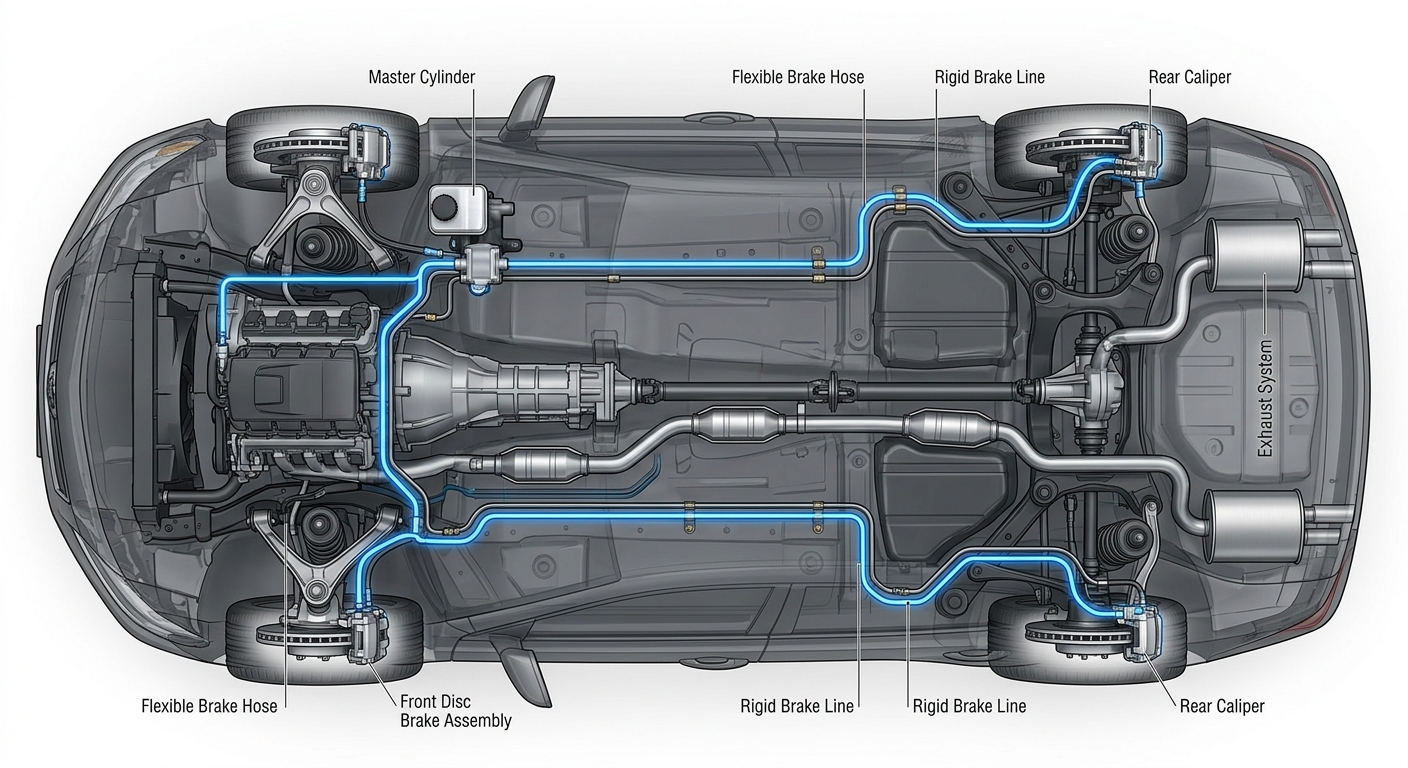
The physical components that transmit hydraulic pressure are the most critical safety systems on any vehicle. When you press down on the brake pedal, fluid is forced through a network of rigid metal tubes and flexible hoses to press the brake pads against the rotors. This hydraulic pressure must remain perfectly sealed to generate the friction needed to bring your vehicle to a complete stop. The service team at Newton Nissan of Gallatin works daily to ensure every vehicle stops exactly when it needs to. I always emphasize that your brakes are not something to ignore, as even a minor leak can lead to catastrophic failure.
To keep your vehicle running safely, visit our homepage to learn more about our comprehensive maintenance offerings. If you need to find us, you can easily get directions to our service center located at 1461 Nashville Pike, Gallatin, TN 37066. You can also give the team a quick call at (615) 442-3090 to discuss any immediate concerns.
Table of Contents
- Why Brake Line Replacement Costs Vary Across Different Vehicles
- How to Identify a Leaking or Corroded Brake Line Before Failure
- The Science of Stopping: Standard Automotive Brake Line Specifications
- Protecting Your Hydraulic System from Road Salt and Rural Terrain
- Why Professional Hydraulic Service Safeguards Your Daily Commute
Why Brake Line Replacement Costs Vary Across Different Vehicles
Why do brake line repairs cost more on some vehicles? The answer comes down to vehicle design, plumbing complexity, and physical accessibility. In my experience, some vehicles require hours of labor just to access a single corroded fitting.
When you browse new cars or check out our new Nissan inventory, you are looking at vehicles equipped with highly sophisticated safety systems. For instance, if you are looking to shop new Nissan Leaf inventory or explore other options in our new electric vehicles selection, the braking systems are integrated with regenerative braking technology. Similarly, if you want to shop new Nissan Rogue PHEV inventory, the dual nature of the hybrid drivetrain means the hydraulic lines must work in tandem with electric motors.
When you shop new Nissan vehicles on our lot, from compact sedans to heavy-duty haulers, the physical routing of the brake lines varies wildly. If you decide to shop new Nissan Altima inventory or shop new Nissan Sentra inventory, the compact, front-wheel-drive layout keeps the brake lines relatively accessible. The same applies when you shop new Nissan Versa inventory or look for a sports car to shop new Nissan Z inventory. If you want to shop new cars with traditional gasoline engines, the layouts are straightforward.
However, if you want to shop new Nissan Frontier inventory or shop new trucks, the lines are longer and designed to handle heavier loads. For those looking to shop new Nissan Kicks inventory or explore the sporty shop new Nissan Kicks Play inventory, the compact crossover layout is highly efficient but tightly packed. If you need more space and want to shop new Nissan Armada inventory or shop new Nissan Pathfinder inventory, the sheer size of these three-row SUVs means longer runs of rigid tubing. You will find similar engineering when you shop new crossovers and SUVs, including if you shop new Nissan Murano inventory or shop new Nissan Rogue inventory.
To keep these systems in perfect order, you can order parts online or visit our parts department to get the exact OEM-specified lines and fittings. To understand how we stand behind our work, you can discover why buy from us and learn about our commitment to quality service.
How to Identify a Leaking or Corroded Brake Line Before Failure
During a routine safety inspection, technicians often look for a faint greenish crust forming around the hydraulic fittings. This buildup is a classic warning sign of brake line corrosion. We often find that catching these issues early prevents more costly repairs later.
If you are currently driving an older vehicle and want to upgrade to a more reliable option, you can browse affordable cars in our inventory. We also have a great selection of pre-owned models, so feel free to browse used Nissan Armada inventory if you need a spacious, heavy-duty family vehicle. You can also browse used Nissan inventory or look at our general used cars for sale to find a vehicle that has been thoroughly inspected and certified by our expert team.
When a driver brings their vehicle to our service bay complaining of a spongy pedal, they often ask if it always means a bad line. In reality, while a spongy pedal usually indicates air in the system caused by a leak, it could also point to a faulty master cylinder or low fluid levels. I always tell drivers that you absolutely cannot drive with even a small brake line leak.
Fresh brake fluid is typically clear or light yellow, while older, contaminated fluid that needs service appears dark brown or black. If you see dark spots forming under your vehicle, it is time for an inspection.
The Science of Stopping: Standard Automotive Brake Line Specifications
Automotive brake systems are engineered to operate under extreme hydraulic pressures, typically between 1,000 and 2,000 PSI during normal stopping, with burst strengths designed to exceed 5,000 PSI. Most modern passenger vehicles use double-walled steel tubing with a 3/16 inch or 1/4 inch diameter. The difference between 3/16 and 1/4 brake lines is that 3/16 inch lines are standard for most passenger car brake systems, while 1/4 inch lines are often used for the main line running from the master cylinder to the rear of larger trucks and SUVs.
The tubing is often coated in zinc or PVF for corrosion resistance. Flexible sections are typically made of reinforced rubber or braided stainless steel. In my experience, stainless steel braided lines expand less under pressure than rubber hoses, providing a firmer pedal feel and better protection against debris.
When you browse used cars on our lot, our technicians verify that these standard specifications are met. If you are looking to shop used vehicles under $30K, you can rest assured that every vehicle has undergone a rigorous safety check. We invite you to browse used Nissan inventory or explore our used Nissan inventory options. To get even more peace of mind, you can learn about our CPO program and see how we certify our pre-owned vehicles.
Protecting Your Hydraulic System from Road Salt and Rural Terrain
The gently rolling terrain and rural farming paths around Cross Plains are where vehicles often put their hydraulic systems to the test, especially when hauling agricultural loads or navigating dirt roads. For many drivers in Westmoreland who commute daily to larger towns, maintaining reliable stopping power is essential, particularly during wet or icy seasons when road salt is applied. Brake lines operating in harsh winter climates or on salted roads should receive more frequent inspections because road salt and moisture accelerate external corrosion and can cause lines to rust through.
In regions without heavy road salt, metal brake lines can last the life of the vehicle, but in coastal or snowy areas, they may corrode within 10 to 15 years. Industry maintenance guidance recommends flushing and replacing brake fluid about every 2 years or 24,000 miles to limit internal corrosion in brake lines and maintain proper hydraulic performance. I find that proactive fluid flushes can save drivers from expensive line replacements down the road.
If you are on a budget, you can shop used vehicles under $10K or shop used vehicles under $20K to find an affordable daily commuter. You can also browse used Nissan Altima inventory for a highly reliable sedan. Our dealership team understands the exact environmental challenges your vehicle faces.
Why Professional Hydraulic Service Safeguards Your Daily Commute
Many car owners believe that a simple brake fluid flush is enough to fix a spongy pedal, but it is critical to differentiate between a fluid flush and actual line repair. Proper brake line service differentiates between repairing or replacing damaged lines or hoses to stop leaks, and performing a brake fluid flush, which replaces aged or contaminated fluid but does not by itself correct physical line corrosion or cracking. Our certified technicians always perform a complete inspection to identify the root cause of the issue before recommending a repair.
When replacing corroded or leaking brake lines, the system must be thoroughly bled at all four wheels until no air bubbles remain, and the vehicle should not be driven until the pedal is firm and all fittings remain completely dry under pressure. Many service guidelines advise integrating brake line checks into annual or twice-yearly brake inspections so that technicians can identify rust, cracks in flexible hoses, loose clips, or interference with moving components before they compromise braking safety.
If you ever experience a sudden brake line failure or other mechanical breakdown, remember that Nissan vehicles are backed by complimentary manufacturer roadside assistance. You can contact Nissan Roadside Assistance: 1-800-225-2476 for 24/7 support. This service includes towing to the nearest authorized Nissan service center, ensuring your vehicle is repaired using genuine parts by certified technicians.
To schedule an inspection or repair, you can call us at (615) 442-3090 or get directions to our Gallatin location. If you are considering upgrading your ride, you can browse used Nissan Murano inventory, value your trade-in, and apply for financing online before you visit.
0 comment(s) so far on Why Do Some Vehicles Cost So Much More for Brake Line Repairs?