

Why Real-World Fuel Economy Starts With Proper Vehicle Maintenance
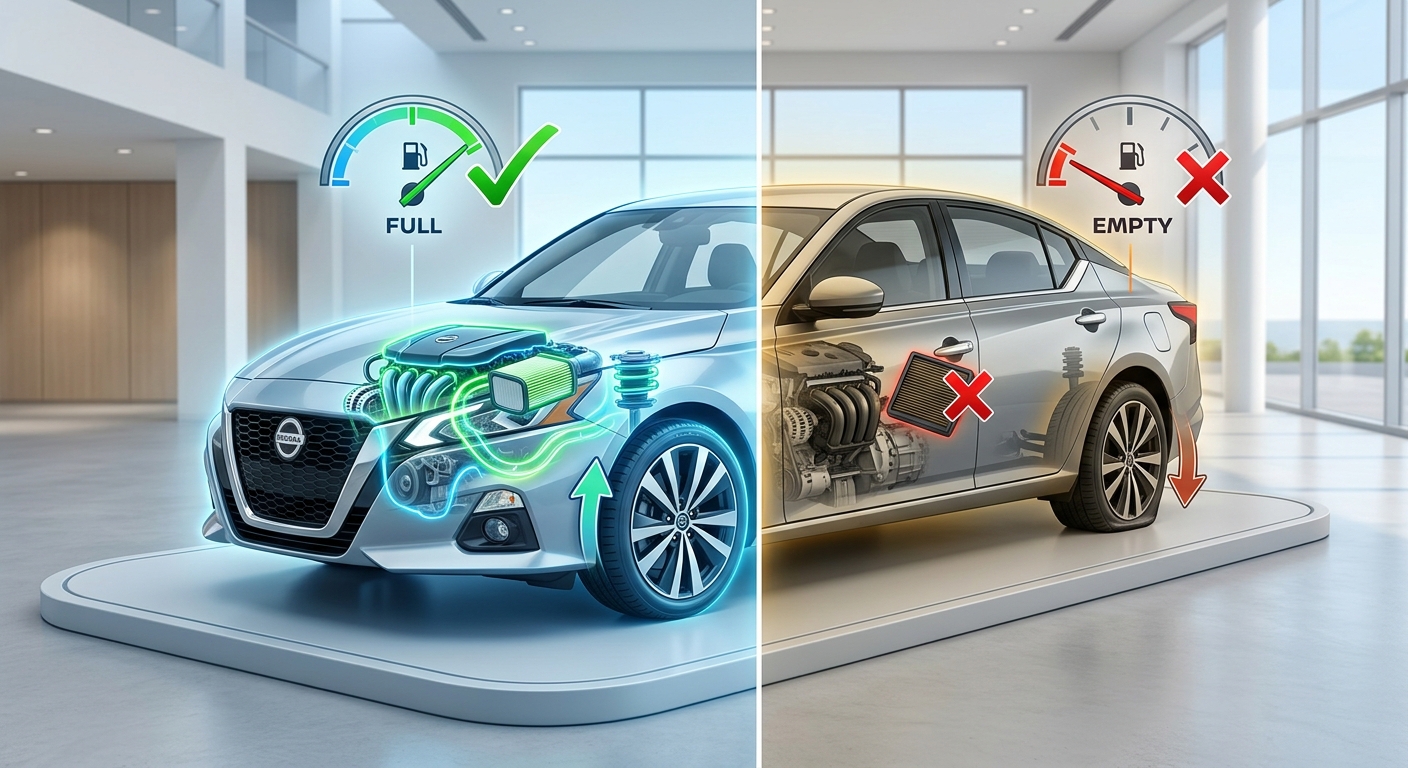
Achieving excellent fuel economy involves more than just selecting a highly rated vehicle; it requires keeping that vehicle in peak operating condition. Many drivers do not realize that minor mechanical inefficiencies can slowly degrade gas mileage over time. When a vehicle leaves the assembly line, its components are perfectly calibrated to deliver the fuel economy listed on the window sticker. However, daily driving creates wear and tear that disrupts this calibration. By understanding how routine upkeep preserves your vehicle’s engineering, you can prevent unnecessary stops at the pump.
If you are looking to minimize your fuel costs, choosing an inherently efficient vehicle is an excellent starting point. Drivers can explore highly efficient options like the new Nissan Sentra, which delivers impressive efficiency without sacrificing modern cabin technology. For those interested in maximizing their efficiency, we offer a diverse selection of models. You can browse new cars or explore our entire lineup by searching our new Nissan inventory online.
Transitioning away from traditional gasoline altogether is another highly effective way to lower your energy costs. Drivers looking to eliminate gasoline consumption entirely can shop new Nissan Leaf inventory or check out our complete selection to shop new electric vehicles. If you prefer a model that balances gasoline and electric power, you can shop new Nissan Rogue PHEV inventory. Our team is always ready to assist you in finding the perfect match, and we encourage you to discover why buy from us. To see these efficient models in person, you can get directions to Newton Nissan of Gallatin or give our service and sales team a quick call to discuss your efficiency goals.
Table of Contents
- Which Maintenance Items Matter Most for MPG
- The Impact of Tires and Wheel Alignment on Fuel Consumption
- How Mechanical Engine Components and Spark Plugs Control Your Fuel Burn
- Recognizing the Warning Signs of Clogged Air Filters and Failing Oxygen Sensors
- Choosing the Right Vehicle for Commuting in Rural Areas
- Common Questions About Vehicle Maintenance and Fuel Efficiency
- Keep Your Vehicle Running Efficiently
Which Maintenance Items Matter Most for MPG
When looking at the primary mechanical factors that dictate fuel efficiency, certain routine maintenance tasks have a far greater impact on your gas mileage than others. The EPA notes that keeping your vehicle properly maintained can improve fuel economy by around 1 to 2 percent, helping you reach your vehicle’s rated fuel economy. However, ignoring specific critical components can cause your mileage to plummet far below those factory ratings.
To understand how maintenance preserves efficiency, it helps to look at a highly optimized baseline. For example, the 2026 Nissan Sentra S achieves an EPA-estimated 30 mpg city / 38 hwy / 33 combined using its 2.0L four-cylinder engine and CVT. If you drive the 2026 Nissan Sentra SR or SL, the EPA ratings are 29 city / 36 hwy / 32 combined due to their wider tires and additional standard equipment. When these vehicles are brand new, their fuel systems, ignition components, and tires work in perfect harmony. If you neglect basic maintenance, those rated figures can drop significantly.
If you are currently driving an older vehicle that is underperforming at the pump, upgrading to a more efficient pre-owned model is a highly practical solution. Budget-conscious shoppers can browse affordable cars in our pre-owned inventory to find a model that fits their financial goals. For those who prefer a midsize option, you can browse used Nissan Altima inventory to find a spacious sedan with strong highway efficiency. Alternatively, if you want a versatile crossover that is easy to park and highly efficient, you can browse used Nissan Kicks inventory to see our current pre-owned options.
Fuel Economy
Fuel economy and range by trim
| Feature | S | SL | SR | SV |
|---|---|---|---|---|
| MPG | 30 city / 38 hwy / 33 combined | 29 city / 36 hwy / 32 combined | 29 city / 36 hwy / 32 combined | 30 city / 38 hwy / 33 combined |
The Impact of Tires and Wheel Alignment on Fuel Consumption
Your tires are the only point of contact between your vehicle and the road, making them one of the most influential factors in fuel consumption. Under-inflated tires increase rolling resistance, which forces your engine to work harder to maintain the same speed. This added drag can lower your gas mileage by roughly 0.2 percent for every 1 psi drop in all four tires. Over time, driving on soft tires acts like driving up a continuous, invisible incline, wasting fuel and accelerating tread wear.
Wheel alignment is equally critical to maintaining your vehicle’s efficiency. When your wheels are out of alignment, they do not point in the exact same direction. This misalignment causes the tires to drag slightly against the pavement rather than rolling smoothly, creating excessive friction that drains your fuel tank. If you notice your vehicle pulling to one side on flat stretches of road, your alignment is likely compromised.
For commuters traveling from Portland, maintaining correct tire pressure and alignment is essential. The daily commute from this area often involves mixed highway driving where even a minor drop in tire pressure can visibly increase your weekly fuel expenses. If you are looking to trade in an older, less efficient vehicle for a model with modern efficiency features, you can browse used cars on our lot. We carry a wide variety of fuel-efficient pre-owned models, and you can browse used Nissan inventory to find the right car for your daily drive. If you need assistance with financing options for your next purchase, our team can help you secure bad credit financing to get you into a reliable, efficient vehicle.
How Mechanical Engine Components and Spark Plugs Control Your Fuel Burn
Inside your engine, the combustion process must be precisely controlled to extract the maximum amount of energy from every drop of fuel. The 2.0L engine found in the 2026 Nissan Sentra generates 149 hp and 146 lb-ft of torque, utilizing a CVT to keep the engine in its most efficient operating range. For this system to work perfectly, the spark plugs must deliver a strong, well-timed spark to ignite the air-fuel mixture. Worn or fouled spark plugs can cause incomplete combustion or minor misfires, which wastes unburned fuel and reduces your overall gas mileage.
Most modern vehicles require spark plug replacement every 30,000 to 100,000 miles, depending on the specific plug material and manufacturer recommendations. Over time, the gap between the spark plug electrodes widens due to electrical wear, which demands a higher voltage to jump the gap. This strain can weaken the spark, leading to sluggish acceleration and increased fuel consumption. Keeping these components fresh ensures that your engine converts fuel into motion as efficiently as possible.
When it is time to replace ignition components or other engine parts, using high-quality components is vital for preserving your vehicle’s performance. You can order parts online directly from our dealership to ensure you get components designed specifically for your model. If you prefer to speak with an expert about your vehicle’s needs, feel free to visit our parts department for professional assistance. If you are driving an older vehicle and want to transition to a highly efficient model without a large financial commitment, you can shop used vehicles under $10K to find an affordable daily commuter.
Engine & Performance
Powertrain specs by trim
| Feature | S | SL | SR | SV |
|---|---|---|---|---|
| Engine | 2.0L | 2.0L | 2.0L | 2.0L |
| Horsepower | 149 hp | 149 hp | 149 hp | 149 hp |
| Torque | 146 lb-ft | 146 lb-ft | 146 lb-ft | 146 lb-ft |
| Transmission | CVT | CVT | CVT | CVT |
| Drivetrain | Front-wheel drive | Front-wheel drive | Front-wheel drive | Front-wheel drive |
Recognizing the Warning Signs of Clogged Air Filters and Failing Oxygen Sensors
Your engine requires a precise balance of air and fuel to run efficiently. An engine air filter blocks dust, dirt, and road debris from entering the combustion chambers. While a dirty air filter in a modern fuel-injected engine primarily reduces acceleration rather than dramatically lowering fuel economy, it still forces the engine’s computer to adjust the air-fuel ratio, which can compromise overall drivability. Replacing a clogged filter restores unrestricted airflow, allowing the engine to breathe easily.
The oxygen sensor is another critical component that directly manages fuel consumption. This sensor monitors the level of unburned oxygen in the exhaust gases and sends this data to the engine computer, which continuously adjusts the fuel injection. A failing oxygen sensor can cause the engine to run “rich,” meaning it injects far more fuel than necessary. Common symptoms of a failing oxygen sensor include:
- A glowing check engine light on your dashboard
- A distinct sulfur or rotten egg smell coming from the exhaust pipe
- A sudden, severe drop in fuel economy of up to 40 percent
- Rough idling or hesitation during acceleration
If you are noticing these symptoms on your current vehicle, it may be time to upgrade to a highly reliable pre-owned model. You can browse used Nissan Murano inventory to find a comfortable, well-equipped crossover, or explore our entire selection when you browse used Nissan inventory. When you find the right vehicle for your needs, you can apply for financing online to streamline your purchase process.
Choosing the Right Vehicle for Commuting in Rural Areas
For drivers navigating the rural terrain around Cross Plains, fuel efficiency is often shaped by driving conditions. The landscape in this area features gently rolling countryside, fertile farmland, and moderate elevation changes. These terrain variations, combined with longer driving distances between destinations, mean that local drivers need a vehicle that can maintain excellent fuel economy even when climbing gradual hills or traveling on gravel back roads.
Choosing a vehicle with a highly efficient powertrain, such as a responsive four-cylinder engine paired with an advanced continuously variable transmission, helps smooth out these terrain changes without wasting fuel. Vehicles equipped with modern stop/start technology are also highly beneficial, as they temporarily shut off the engine when you are stationary at rural intersections, preventing unnecessary idling.
If your driving habits require a larger vehicle with robust capability for family trips or light hauling, we have excellent options available. You can browse used Nissan Armada inventory to find a spacious, three-row SUV designed for maximum comfort and utility. For buyers working with a specific budget, you can shop used vehicles under $20K to find a reliable, fuel-efficient commuter. Once you identify the model that fits your lifestyle, you can apply for financing now to begin the buying process.
Dimensions & Capacity
Capacity and dimensions by trim
| Feature | S | SL | SR | SV |
|---|---|---|---|---|
| Seating | 5 | 5 | 5 | 5 |
| Cargo | 14.3 cu ft | 14.3 cu ft | 14.3 cu ft | 14.3 cu ft |
| Curb weight | 3,098 lbs | 3,177 lbs | 3,153 lbs | 3,098 lbs |
Common Questions About Vehicle Maintenance and Fuel Efficiency
To help you get the most out of every tank of fuel, our team has compiled answers to some of the most common questions we receive regarding maintenance and gas mileage.
Q: Does a dirty engine air filter directly lower my gas mileage?
On modern fuel-injected engines, a dirty air filter primarily reduces acceleration rather than directly lowering fuel economy. The engine computer automatically adjusts the fuel flow to match the reduced airflow, which prevents excess fuel consumption but can make the vehicle feel sluggish. Replacing a dirty filter restores your vehicle’s original acceleration and responsiveness.
Q: How can I find the correct tire pressure for my specific vehicle?
The correct tire pressure is listed on a white and yellow label located on the driver-side door jamb, or inside your owner’s manual. You should never use the maximum pressure number printed on the tire sidewall itself, as that number represents the maximum pressure the tire can safely hold, not the optimal pressure for your vehicle’s ride comfort, handling, and fuel efficiency.
Q: Can a malfunctioning thermostat cause my vehicle to burn more fuel?
Yes. If a thermostat gets stuck in the open position, it allows coolant to flow constantly, preventing the engine from reaching its optimal operating temperature. Because the engine remains too cold, the computer assumes the vehicle is still warming up and continues to inject a rich fuel mixture, which noticeably increases fuel consumption.
Q: How often should I have my wheel alignment checked?
It is generally recommended to have your wheel alignment checked once a year or every 12,000 miles. You should also have it checked immediately if you hit a deep pothole, notice uneven tire wear, or feel your vehicle pulling to one side, as improper alignment increases rolling resistance and wastes fuel.
Q: Where can I learn more about the vehicle options and history at your dealership?
You can learn about us and our commitment to serving local drivers online. We also invite you to learn about CPO program benefits for added peace of mind, explore our special events like learn about happy hour, or check out how we support local organizations when you learn about community involvement. Additionally, you can learn about Newton Fastpass to see how we make the buying process simple and efficient.
Keep Your Vehicle Running Efficiently
Maintaining your vehicle’s key mechanical systems is the most reliable way to protect your fuel economy and keep your operating costs low. Simple tasks like checking your tire pressure monthly, replacing worn spark plugs, and ensuring your wheels are properly aligned can prevent minor issues from turning into expensive fuel bills. By staying proactive with your maintenance schedule, you can enjoy the full efficiency and performance your vehicle was engineered to deliver.
Whether you are looking to service your current vehicle or upgrade to a more efficient model, our team is here to help. If you are shopping for a pre-owned vehicle, you can shop used vehicles under $30K to find an affordable, fuel-efficient car that fits your budget. For personalized service or to explore our current inventory in person, please get directions to Newton Nissan of Gallatin and visit our showroom. You can also give our team a quick call to schedule a maintenance appointment or discuss your next vehicle purchase.
0 comment(s) so far on Why Real-World Fuel Economy Starts With Proper Vehicle Maintenance