

How to Shop for a Lifted Truck

Whether you simply like how it looks or you are looking to do some serious off-roading, a lifted truck can be a great investment for your next vehicle. However, it’s important to remember that lifted trucks aren’t necessarily right for everyone because while they offer some advantages, they also have a few drawbacks to consider. Shopping for a lifted truck can be tricky since you’ll find fewer of them out there than standard pickups with no or few aftermarket changes. Knowing what to look for, and having an expert by your side, can make things easier and help ensure you find the perfect truck with everything you need.
Do You Need a Lifted Truck?
One of the first things to consider, as you’re shopping for your next truck and looking at all of your options, is whether a lifted model is right for you. Some of our customers think that a truck needs to be lifted for it to be a good off-road pickup, but that isn’t necessarily true. While lift kits can help add ground clearance (although this isn’t always the case, as we’ll see below), there are plenty of great trucks out there already designed with excellent clearance and off-road functionality from the factory. A lift on these trucks can make them even better for going off-road, but the kinds of trails you plan on hitting can greatly impact whether a lift is something you really need.
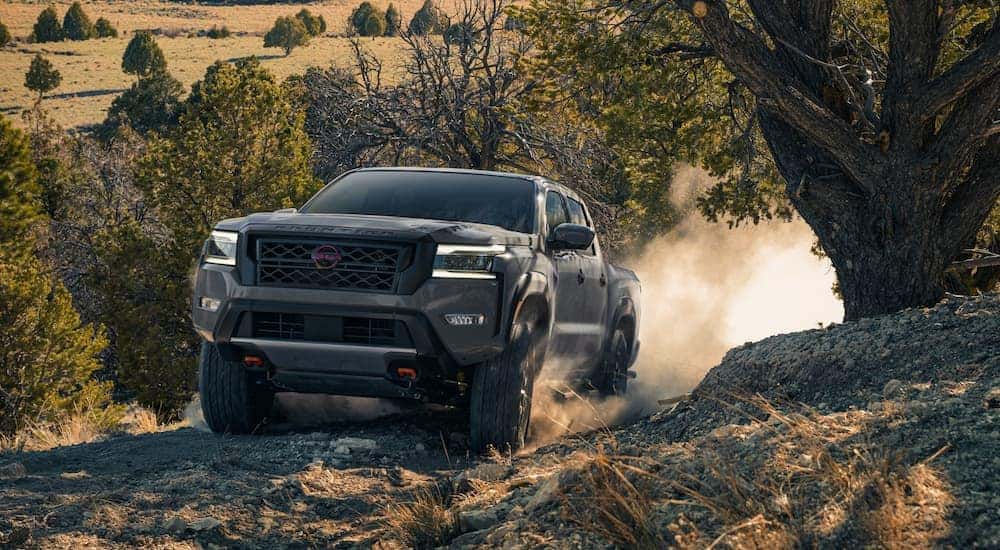
For example, Nissan offers both its midsize Frontier and full-size Titan trucks in an off-road-focused PRO-4X trim. These models feature strong skid plates on the underside to protect them on the trail, enhanced ground clearance, and off-road-tuned Bilstein shocks for the best articulation, comfort, and performance on the trail. While they don’t have full lift kits installed, they both already have more than 9 inches of ground clearance, which enables them to handle a lot of challenging trails.
These trucks are fantastic for going off-road, and for most people, they can handle whatever you plan on throwing at them. That being said, you still might want to tackle terrain that a factory-built Nissan pickup (or one from another manufacturer) isn’t quite up for. In those cases, a lifted truck can help get the job done, but it’s important to know what you should look for.

Types of Lift Kits
There are actually quite a few different types of lift kits available, particularly when you look at exactly how the lift is achieved. In order to keep things simple, however, let’s take a look at the three main categories and what each one accomplishes. Beyond these types, you’ll find different lift kits based on how the lift is accomplished, but those typically fall into one of these three categories; they’re just more specific.
- Leveling Kits – These are the simplest and typically the least expensive type of kits that can be installed. A leveling kit does just what the name suggests: it levels out the suspension between front and rear for better overall distribution and a cleaner look.
- Body Lift Kits – Next up from a leveling kit is a body lift, which can also be a pretty inexpensive option. These kits involve disconnecting the body of the truck from the frame, adding spacers, and then reattaching it to lift it higher. The frame and suspension remain where they are, so no ground clearance is gained, though you can fit larger tires on thanks to the raised body.
- Suspension Lift Kits – Finally, suspension lift kits deliver the most extreme changes to a truck and are usually the most expensive. With these kits, the suspension itself is replaced or altered in a way that actually lifts up the frame and the rest of the vehicle. If you’re looking for a model with greater ground clearance than what’s offered from the factory, then a suspension-lifted truck is the way to go.
As you can see, when someone talks about a truck with a lift kit, they can be referring to some very different things. While shopping for a truck and looking at models that have a lift installed, you need to make sure you know what kind of lift the truck has. Each type of lift accomplishes what they do differently and provides you with different results––with both pros and cons. Simply knowing that something is a “lifted truck” isn’t enough for you to go by while you shop; understanding what you’re looking for makes a big difference in how well you can find it.
What Do You Need in a Truck?
Since different types of lift kits accomplish different things and result in significantly different lifted trucks, it’s important to figure out exactly what you need your truck to do before you buy. The more you know about what you’re looking for, the easier it will be to find it. From a purely aesthetic perspective, a truck that has had a leveling kit installed can be the best choice since it will look great from the outside. These models can also work well for doing a lot of towing since the front and rear have been leveled out, but that’s not a requirement.
If you’re looking for a truck with great big tires on it, then a body-lifted pickup can be an excellent choice. Depending on the kit that was installed, these trucks can handle up to 33-inch tires on them, far beyond anything available from the factory on a Nissan (and from most manufacturers). When you’re looking at trucks with body lifts, be sure to look for any potential damage to the body––not everyone installs them properly, and mistakes can happen. The installation of spacers for these kits can also result in a visible gap between the frame and body, so look for ones with “gap guards” or other accessories installed to cover this space.
For a truck with incredible ground clearance, a vehicle with a suspension lift can be a great choice. Not only can these models handle large tires, like body-lifted trucks, but they can also have raised suspensions that are perfect for doing some serious rock crawling and handling other sorts of adventures. The biggest thing to keep in mind is that altering the suspension can have a big impact on the handling of the truck; when installed improperly, this can potentially void warranty coverage on the pickup. Take your time to thoroughly inspect a truck with a suspension lift to ensure it was installed correctly, and note that it may handle worse on city streets and highways than an unmodified version of the truck.
Finding the Perfect Lifted Truck
Ultimately, like any other aftermarket modification to a vehicle, a truck with a lift kit installed has advantages and drawbacks to keep in mind. No matter what kind of kit you’re looking at, the most important thing is that it was installed properly and that the truck wasn’t damaged in the process. It’s always a good idea to take any lifted truck for a test drive before you buy it––you should test any vehicle, but it’s even more important here––in order to judge how it handles and make sure nothing feels off about it. Lifted trucks can be a lot of fun, especially when you go off-road, but take your time and shop with a dealership you can trust to make sure your investment in your next vehicle is a good one.
0 comment(s) so far on How to Shop for a Lifted Truck